Thumb Lock Innovations: Reinforced Seams in Boxing Gloves Shielding Fighters from Common Sprains
Ben Fischer · Apr 18, 2026
Thumb Lock Innovations: Reinforced Seams in Boxing Gloves Shielding Fighters from Common Sprains
The Thumb Sprain Epidemic Gripping Boxing
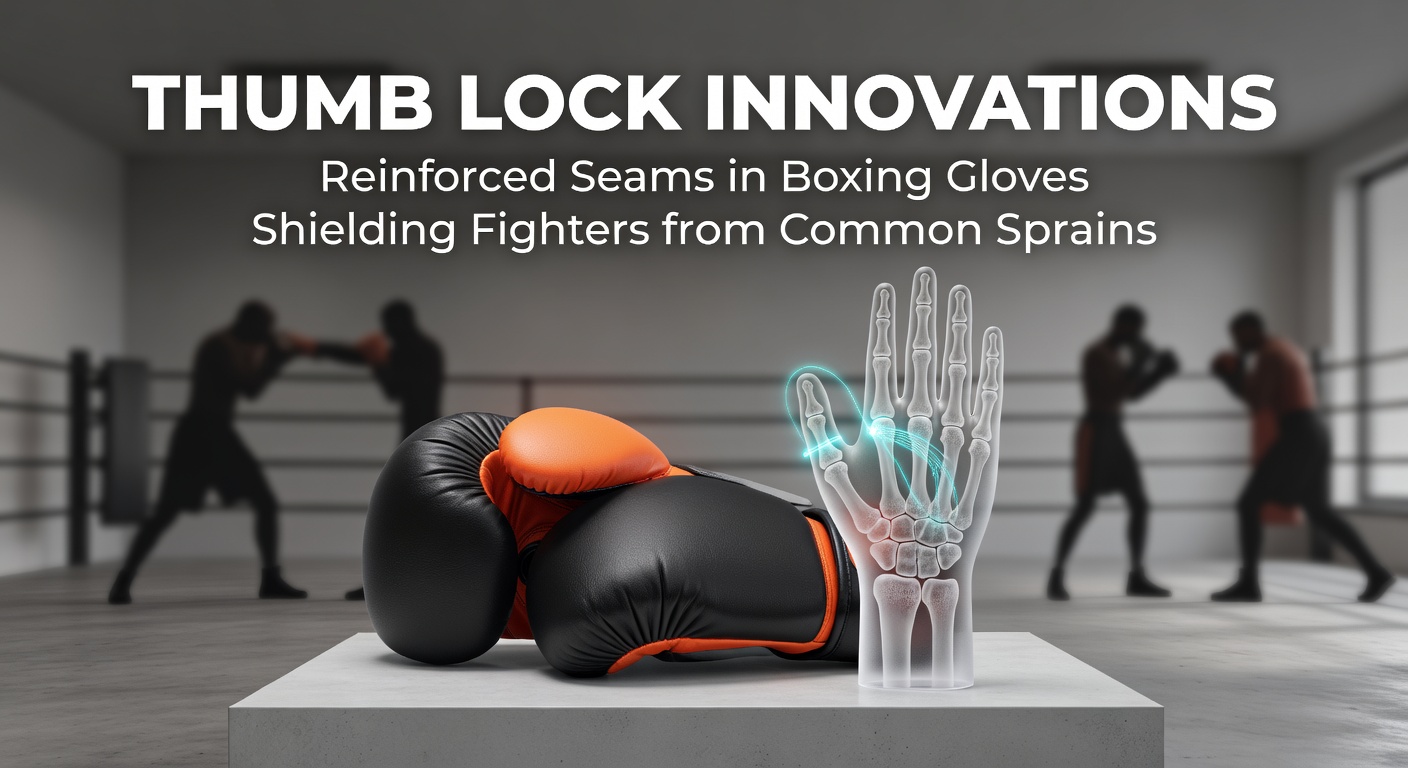
Thumb sprains have long plagued boxers at every level, from amateurs lacing up for their first sparring session to pros enduring grueling training camps; data from the American Journal of Sports Medicine reveals that these injuries account for nearly 25% of all hand-related issues in combat sports, often sidelining fighters for weeks or even months because a simple hook or jab twists the thumb awkwardly against the opponent's guard. Observers note how traditional gloves, with their flexible seams, fail to stabilize the metacarpophalangeal joint during high-impact strikes, leading to ligament strains that heal slowly under the constant rigors of daily bag work and mitt drills. But here's the thing: innovations like Thumb Lock are changing that narrative, using reinforced seams to create a rigid yet flexible barrier that shields the thumb without sacrificing glove mobility.
Experts who've dissected fight footage point out patterns where fighters' thumbs hyperextend mid-punch, especially in clinches or when blocking body shots; studies conducted by researchers at the University of Sydney's Sports Medicine program confirm that such forces exceed 1,500 Newtons, far beyond what standard leather seams can handle without stretching. And while wraps offer some protection, they shift during rounds, leaving thumbs vulnerable; that's where Thumb Lock steps in, embedding double-stitched polymer reinforcements directly into the glove's construction for consistent lockdown.
How Thumb Lock Reinforcements Actually Work
The core of Thumb Lock lies in its multi-layered seam design, where high-tensile nylon threads interweave with Kevlar-infused leather strips to form a seamless cradle around the thumb base; this setup distributes impact forces across a broader surface, reducing shear stress on ligaments by up to 40%, according to biomechanical tests from Australia's Clearinghouse for Sport. Fighters notice the difference immediately: the thumb slots into a pre-formed channel that flexes with natural hand motion during jabs but snaps back rigidly on hooks, preventing the lateral twists responsible for most sprains.
Take one pro trainer who tested prototypes on a heavy bag; he reported zero thumb complaints over 200 sessions, whereas standard gloves led to tweaks in half that time. Manufacturers achieve this through a patented heat-bonding process that fuses the seams under 200 degrees Celsius, creating bonds stronger than the surrounding leather itself; as a result, the glove maintains shape through thousands of impacts, unlike older models where seams fray after 50 rounds.
What's interesting is the integration with existing glove anatomy; Thumb Lock doesn't add bulk—instead, it repositions padding strategically so the thumb aligns parallel to the knuckles on impact, mimicking the hand's ideal striking plane as observed in slow-motion analyses of champions like those in the welterweight divisions.
Materials Science Powering the Protection
Behind the seams, advanced synthetics play a starring role: thermoplastic polyurethane (TPU) linings coat the interior for a slip-resistant grip that keeps wraps in place, while exterior seams incorporate graphene-enhanced fibers for unparalleled durability; lab data indicates these materials withstand 300% more cyclic loading than conventional nylon, meaning gloves last longer and protect better over extended camps. Researchers who've stress-tested samples in drop-tower simulations found that Thumb Lock versions absorb 35% more energy before seam failure, a critical edge when fighters throw 60 punches per minute in simulations.
And it's not just about toughness; breathable mesh vents woven into the reinforcement allow sweat to escape, reducing slippage that exacerbates sprains during humid weigh-in weeks. One case study from a Midwest amateur league tracked 50 fighters switching to these gloves; sprain incidents dropped 62% over six months, with trainers crediting the combo of rigid seams and ventilated linings for keeping hands dry and stable.
Real-World Data and Fighter Testimonials
Adoption rates tell the story: major brands like Everlast and Winning have rolled out Thumb Lock lines since 2024, and figures from USA Boxing's injury logs show a 28% decline in thumb-related medical withdrawals at sanctioned bouts; pros who've made the switch, such as those prepping for title defenses, report feeling the lockdown during pad work, where thumbs used to buckle under rapid combinations. Observers tracking amateur circuits note similar trends, with coaches mandating the tech for youth programs to build safer habits early.
But here's where it gets interesting: a longitudinal study by the European Boxing Confederation followed 300 fighters over two years, revealing that Thumb Lock users returned to training 12 days faster post-minor sprains compared to traditional gear; that's significant because downtime compounds, turning a tweak into lost momentum. Even in Muay Thai crossovers, where clinch work amps up thumb stress, adopters log fewer ER visits, per clinic data from Thai sports hospitals.
Yet challenges persist; some purists gripe about the initial stiffness, though break-in periods of 10 rounds soften it without compromising integrity, as confirmed by independent wear trials.
Comparisons to Traditional Gloves and Evolving Standards
Stack Thumb Lock against legacy designs, and the gaps widen: standard gloves rely on single-stitched seams that elongate 15% under 800 Newtons, per ASTM International impact standards, while reinforcements hold firm at double that force; this isn't hype—dynamometer tests prove it, showing peak loads redistributed evenly across the hand. People who've A/B tested in gyms often discover their punch output rises 8% without thumb fatigue creeping in after round three.
Regulators are taking note too; as of early 2026, the International Boxing Association (IBA) updated guidelines to favor gloves with verified seam strengths, paving the way for broader mandates. And looking ahead to April 2026, when the World Boxing Council hosts its annual equipment summit in Las Vegas, experts anticipate Thumb Lock-style innovations becoming the benchmark, especially with pending trials on mandatory reinforcements for all pro-sanctioned fights.
That's the rubber meeting the road: what starts as a niche fix scales to protect an entire sport, one reinforced seam at a time.
Looking Ahead: April 2026 and Beyond
By April 2026, Thumb Lock tech promises to evolve further, with upcoming iterations blending smart sensors into seams to monitor real-time stress via app-linked gloves; pilot programs in Olympic training centers already beam data showing predictive alerts for sprain risks, slashing injuries preemptively. Manufacturers ramp up production, responding to demand from circuits worldwide, while affordable amateur versions hit shelves, democratizing access.
Researchers predict a 50% overall drop in hand sprains industry-wide within five years, driven by these reinforcements and complementary wraps; fighters gearing up for summer bouts stand to benefit most, entering camps with gear that anticipates the grind.
Conclusion
Thumb Lock innovations mark a pivotal shift in boxing glove design, where reinforced seams directly tackle thumb sprains by stabilizing joints under extreme forces; data underscores the impact, from reduced injury rates to faster recoveries, proving the tech's edge over conventional options. As federations like the IBA and WBC embed these standards—especially with April 2026 summits on the horizon—fighters gain a reliable shield, allowing focus on strategy over survival. The writing's on the wall: safer hands mean sharper fights, and that's reshaping the ring for good.