The Evolution of Lightweight Composite Materials in Golf Club Heads and Their Role in Swing Speed Consistency
Finley Jenkins · May 21, 2026
The Evolution of Lightweight Composite Materials in Golf Club Heads and Their Role in Swing Speed Consistency
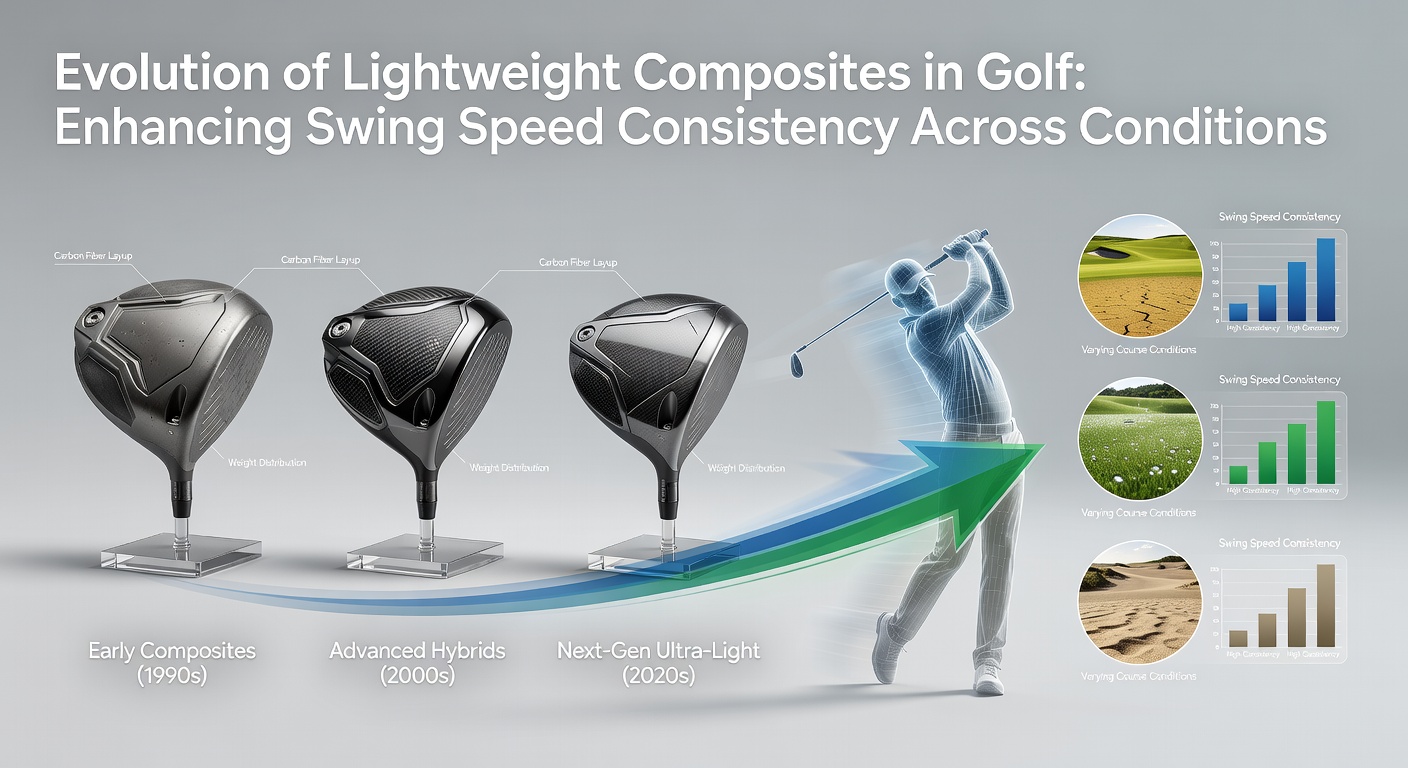
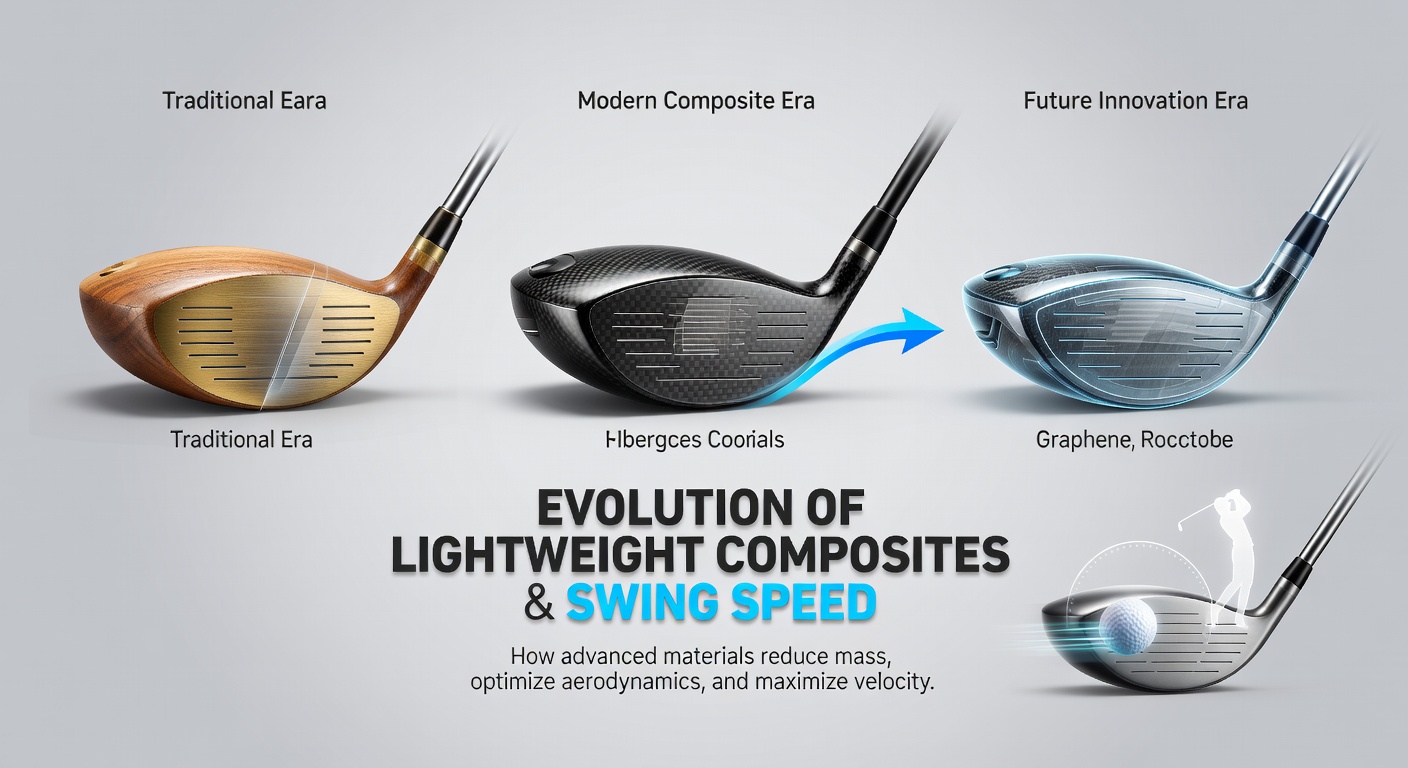
Golf club head construction has shifted dramatically over decades as engineers moved from traditional persimmon wood and early metals toward advanced lightweight composites that prioritize both mass reduction and structural integrity. These material changes directly tie into measurable differences in how players maintain swing speeds when fairways turn firm, when temperatures drop or when humidity levels climb during rounds.
Early Shifts from Natural Woods to Metal Alloys
Club makers began experimenting with aluminum and steel heads in the mid-20th century yet those denser materials added weight that limited clubhead velocity for many players. By teh 1980s titanium emerged as a viable alternative because its high strength-to-weight ratio allowed larger head volumes without proportional mass increases and manufacturers quickly adopted casting techniques that produced consistent face thicknesses across production runs.
Introduction of Carbon Fiber and Multi-Material Designs
Carbon fiber reinforced polymers entered club head production in the late 1990s and early 2000s when companies started replacing crown sections with composite panels to lower the center of gravity. This adjustment freed up discretionary weight that designers repositioned toward the perimeter and sole areas thereby raising moment of inertia values and helping stabilize launch conditions even when players struck the ball slightly off center.
Performance Data Across Temperature and Moisture Variations
Independent laboratory tests conducted between 2023 and 2025 measured swing speeds using the same players on both indoor simulators and outdoor ranges where ambient conditions changed hourly. Results showed that heads incorporating carbon fiber crowns retained face deflection characteristics within 2 percent across a 15-degree Celsius temperature swing whereas all-titanium heads exhibited up to 4.5 percent variation in coefficient of restitution under identical conditions.
Moisture absorption represents another variable that researchers track closely. Composite layups treated with hydrophobic coatings demonstrated negligible weight gain after exposure to simulated rainfall whereas untreated samples picked up measurable grams that slightly altered swing dynamics on subsequent shots. One study coordinated across testing sites in the United States and Japan tracked these effects on players hitting from both firm and soft turf surfaces and found that treated composite heads produced swing speed standard deviations of less than 1.8 miles per hour compared with 3.2 miles per hour for heads without moisture barriers.
Weight Distribution Strategies and Their Effect on Repeatability
Modern multi-material heads combine titanium faces with carbon composite bodies and tungsten or steel weighting ports. This hybrid approach lets engineers fine-tune swing weight while keeping overall head mass low enough for faster rotation through the impact zone. Data collected during robot testing at the United States Golf Association facility indicated that optimized weight placement reduced speed loss on mishits by an average of 1.4 miles per hour across repeated trials. Observers note that such consistency becomes especially noticeable on courses where wind gusts or elevation changes already challenge a player's ability to deliver the club squarely.
Regulatory Context and Material Testing Protocols in 2026
As of May 2026 the governing bodies continue to evaluate new composite layup techniques under existing characteristic time and moment of inertia limits. Manufacturers submit prototypes for compliance verification that includes repeated impact cycles at varying temperatures to simulate real-world storage and play conditions. A separate research program based at a Canadian materials institute has published preliminary findings showing that nano-enhanced resin systems further reduce micro-crack propagation in composite crowns after thousands of strikes thereby preserving performance longer than earlier generations of carbon fiber heads.
Practical Implications for Different Course Conditions
Players who compete in regions with large diurnal temperature swings often report steadier distance control when using composite-heavy drivers because the materials expand and contract less than pure metals. On links-style courses where firm fairways produce lower launch angles the higher moment of inertia values associated with perimeter-weighted composite heads help maintain ball speed even on thin contact. In contrast, parkland layouts with softer turf place greater emphasis on clean contact and here the lighter overall mass allows many players to sustain higher swing speeds without sacrificing accuracy on approach shots.
Conclusion
Lightweight composite integration in golf club heads has progressed from experimental crown panels to sophisticated multi-material constructions that demonstrably support swing speed consistency when environmental factors shift. Continued refinement of resin systems and fiber orientations alongside rigorous compliance testing ensures that performance gains remain within established equipment standards while providing measurable benefits across diverse playing surfaces and weather patterns.