Silicone Bead Patterns on Swim Cap Edges and Their Function in Preventing Slippage During Flip Turns
Finley Jenkins · Jul 18, 2026
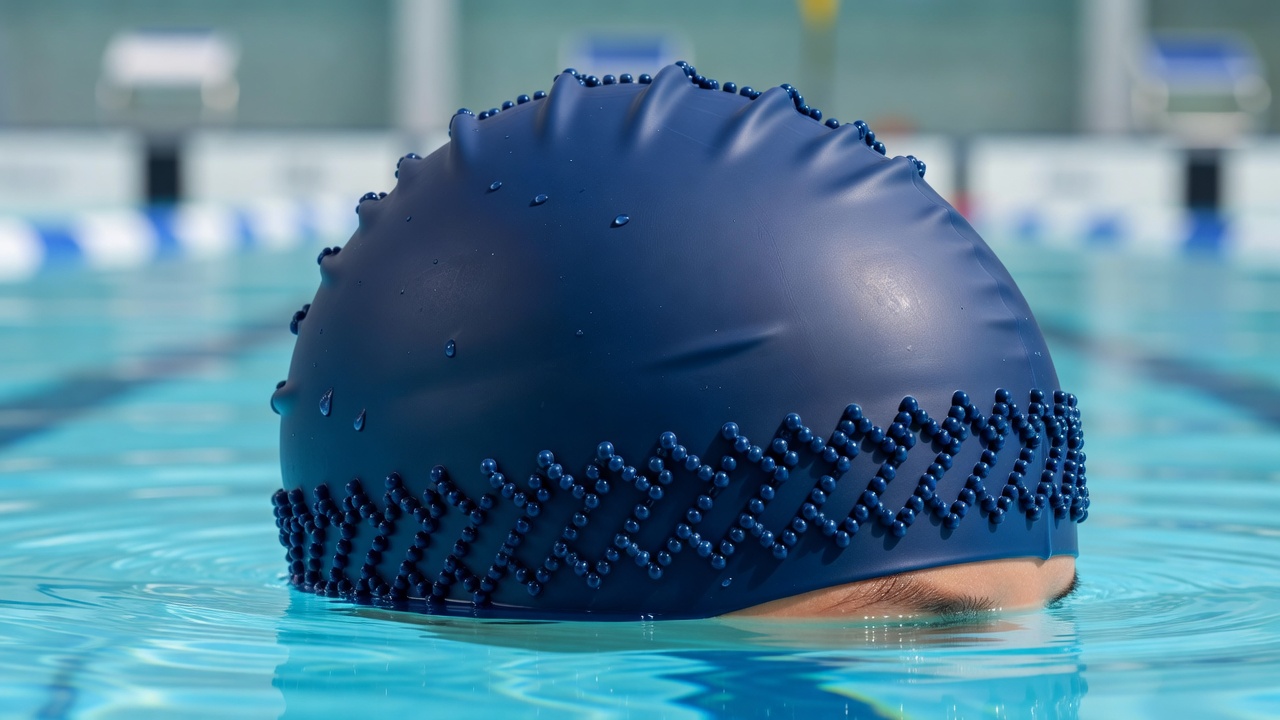
Silicone Bead Patterns on Swim Cap Edges and Their Function in Preventing Slippage During Flip Turns
Swim caps equipped with silicone bead patterns along their edges address a specific challenge in lap swimming where repeated flip turns create dynamic water forces that can shift or dislodge standard head coverings. These patterns consist of raised silicone elements molded or applied to the interior rim and they interact with the swimmer's hair and scalp to maintain position without requiring constant adjustment. Manufacturers produce these features in various configurations including dotted arrays, linear ridges, and segmented clusters, each calibrated to balance grip strength against comfort during extended sessions.
Design Elements of Silicone Bead Configurations
Engineers select silicone for its elasticity, water resistance, and ability to conform to irregular surfaces like wet hair. The beads typically measure between 1 and 3 millimeters in height and they distribute pressure evenly around the perimeter rather than concentrating force at isolated points. Research from materials testing laboratories shows that uniform spacing prevents localized pressure marks while still generating sufficient friction coefficients to resist movement. Patterns often follow a circumferential layout that aligns with the natural contours of the head, and some designs incorporate micro-channels between beads to allow limited water drainage without compromising the overall seal.
Observers note that bead density varies by intended use, with training caps featuring more aggressive spacing for frequent turns and competition models using subtler arrangements to meet aesthetic and regulatory guidelines. Data from production records indicates that injection molding processes allow precise control over bead geometry, which directly influences how the cap responds to the rapid head rotation and push-off phases of a flip turn.
Mechanics During Flip Turn Execution
Flip turns involve a sequence of head tuck, body rotation, and explosive leg drive that generates turbulent water flow around the swimmer's head. Silicone beads counteract the resulting shear forces by increasing surface contact area and creating mechanical interlocking with hair strands. Studies conducted in controlled flume environments demonstrate that caps without these features experience measurable displacement after multiple turns, whereas patterned versions maintain alignment through the same sequence. The beads engage progressively as water pressure increases, forming a distributed hold that adapts to slight variations in head shape and hair length.
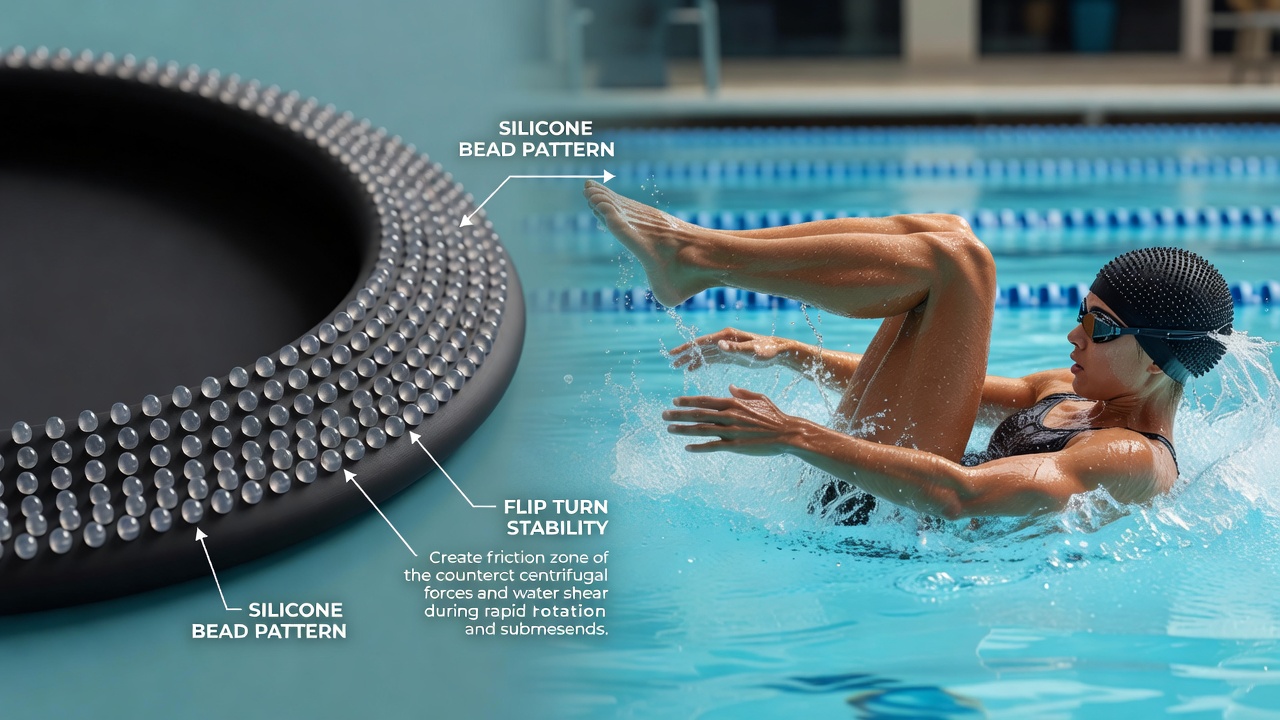
Performance measurements collected by coaching staffs reveal that consistent cap positioning correlates with reduced drag interruptions, since a shifted cap can alter the hydrodynamic profile of the head. The patterns therefore contribute indirectly to stroke efficiency by eliminating the need for mid-length adjustments that break rhythm. In July 2026, several national training programs incorporated updated cap specifications into their protocols ahead of major international meets, reflecting ongoing refinements in bead placement algorithms derived from motion capture analysis.
Material Properties and Durability Factors
Silicone compounds used in these applications undergo specific curing processes that enhance resistance to chlorine degradation and repeated stretching. Laboratory evaluations track elongation at break and recovery rates after thousands of simulated turn cycles, confirming that quality formulations retain grip characteristics over extended periods. According to World Aquatics equipment guidelines, approved materials must meet baseline standards for elasticity and non-toxicity, which manufacturers verify through batch testing before distribution. Geographic differences appear in formulation preferences, with some European producers favoring softer durometer ratings while Australian suppliers emphasize higher tear strength for open-water crossover use.
Additional testing at research institutions such as the Australian Institute of Sport has examined how temperature fluctuations in pool environments affect bead flexibility, noting that colder water temporarily increases stiffness yet does not reduce overall holding power. These findings inform seasonal adjustments in pattern depth for facilities with variable water temperatures.
Integration with Other Swimwear Components
Swimmers often pair edge-patterned caps with goggles and suits engineered for the same hydrodynamic goals. The combined system minimizes points of turbulence, and field observations from training sessions show fewer instances of cap-goggle interference when beads are positioned to sit slightly above the goggle strap line. Manufacturers coordinate these elements during product development to ensure compatibility across different head sizes and stroke preferences.
Conclusion
Silicone bead patterns represent a targeted engineering solution that addresses slippage specifically during the high-stress moments of flip turns. Their design draws on principles of friction, material resilience, and anatomical fit, supported by performance data gathered across training and competition settings. Continued refinement in pattern geometry and compound selection reflects measurable progress tracked through laboratory and in-pool evaluations, providing swimmers with equipment that maintains positioning throughout repeated lap sequences.