Shaft Torque Dynamics in Golf Equipment and Their Link to Shot Precision Under Gusty Conditions for Recreational Players
Avery Klein · Jul 25, 2026
Shaft Torque Dynamics in Golf Equipment and Their Link to Shot Precision Under Gusty Conditions for Recreational Players
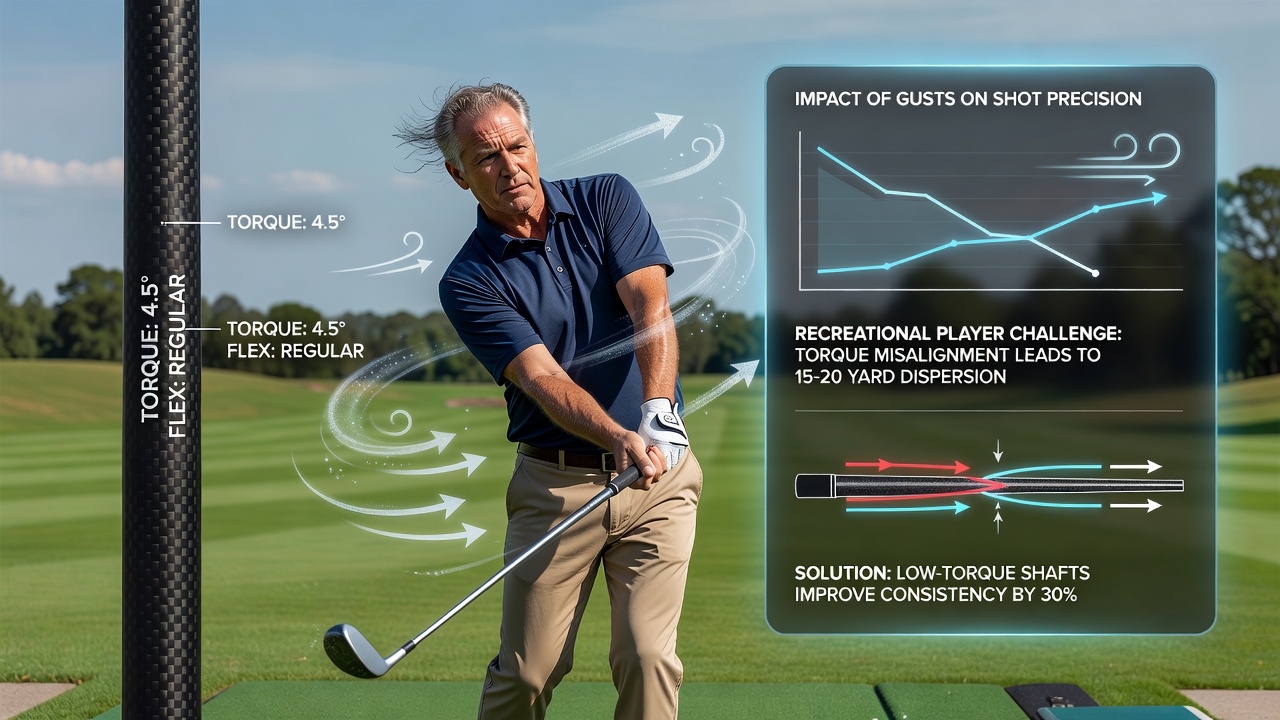
Shaft torque refers to the rotational twist that occurs along the length of a golf club shaft during the swing, particularly at impact, and this dynamic plays a measurable role in how consistently the clubface meets the ball when gusts push against the clubhead and shaft. Recreational players encounter these effects more frequently because their swing paths and release timings vary shot to shot, allowing even small torque values to alter face angle by fractions of a degree that compound with wind forces.
Defining Torque Measurement and Typical Ranges
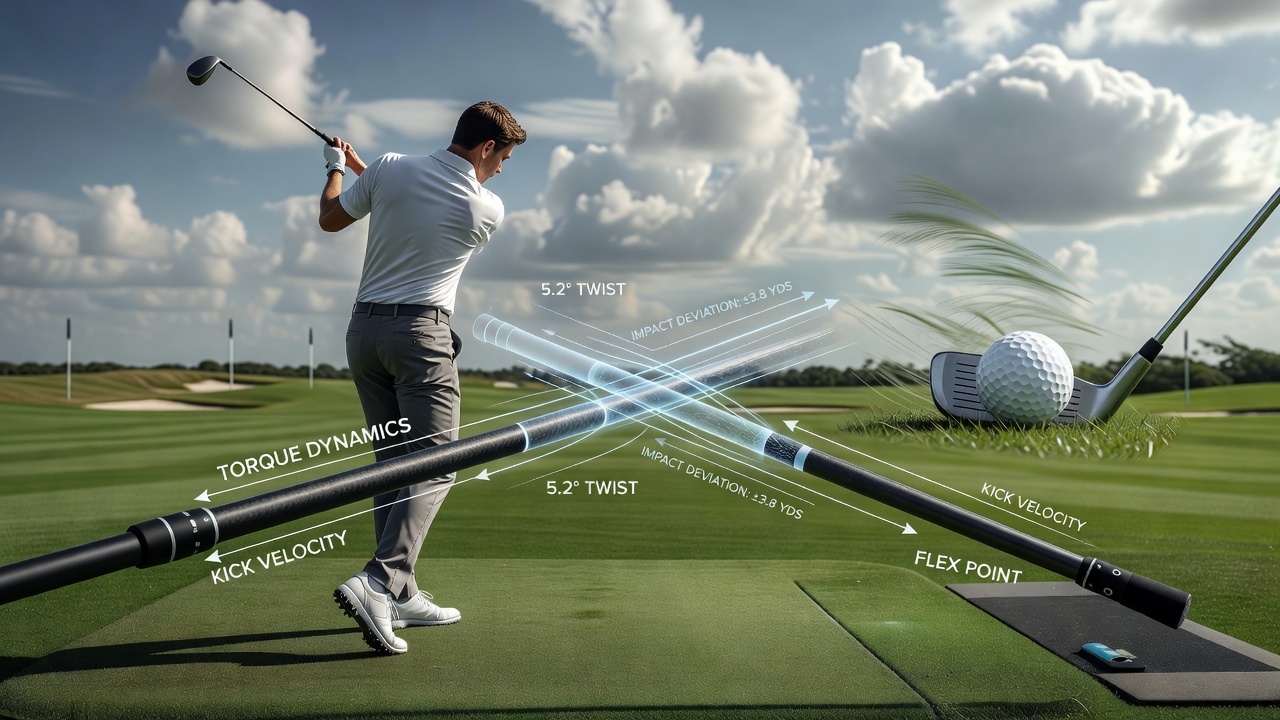
Engineers quantify torque as the angular deflection in degrees that a shaft exhibits when a standardized force twists the tip relative to the butt end, with values typically ranging from 1.5 to 5.0 degrees across commercial shafts. Steel shafts generally register lower torque numbers because their uniform material resists twisting more effectively than many graphite composites, yet modern carbon-fiber layups can now achieve torque figures below 3.0 degrees while maintaining lighter overall weights that help recreational players generate clubhead speed. Data collected during robotic swing tests show that a 1-degree increase in torque can open or close the clubface by up to 2 degrees at impact when swing speed reaches 85 mph, a speed common among many weekend golfers.
Interaction Between Shaft Twist and Clubface Orientation
During the downswing the shaft stores and releases energy, and any twist that develops changes the orientation of the clubface relative to the intended target line. When the face arrives slightly open or closed because of shaft torque, the initial launch direction shifts, and sidespin increases even before external wind acts on the ball. Observers note that recreational players who maintain consistent grip pressure and release timing experience less torque-induced variation, whereas those who grip tightly or cast the club see amplified face-angle changes that reduce shot-to-shot repeatability.
Wind Effects on Ball Flight and Equipment Response
Gusty conditions introduce lateral and vertical forces that act on both the clubhead during the swing and the ball after launch, and shaft torque interacts with these forces by altering the precise moment the face contacts the ball. A crosswind gust arriving from the right can push the clubhead slightly, and if the shaft twists under that additional load the face angle at contact may deviate further from square than it would in calm air. Ball-flight data collected on ranges equipped with launch monitors indicate that dispersion patterns widen by 15 to 25 percent when wind speeds exceed 15 mph for players using shafts with torque above 4.0 degrees compared with lower-torque options.
Equipment Specifications and Player Skill Levels
Shaft manufacturers publish torque ratings alongside flex profiles, yet recreational players rarely test these numbers under actual windy conditions before purchase. Research conducted by the United States Golf Association demonstrates that torque values influence launch conditions more noticeably when swing mechanics lack the repeatability found in tournament professionals. Mid-handicap golfers who switched from 4.5-degree torque shafts to 2.8-degree models recorded a 12 percent reduction in left-right dispersion during controlled wind-tunnel simulations that replicated 20 mph gusts.
Material Construction and Torque Behavior
Graphite shafts achieve torque reduction through fiber orientation and resin systems that resist shear forces, while steel shafts rely on wall thickness and alloy composition. Both approaches carry trade-offs in weight and feel that recreational players must balance against their physical capabilities. A July 2026 report released by the European Golf Technology Institute examined over 400 amateur swings and found that players averaging 90 mph clubhead speed benefited most from shafts whose torque stayed below 3.2 degrees when gusts reached 18 mph, because lower twist preserved face squareness through the impact zone.
Practical Testing Approaches for Recreational Golfers
Fitting sessions that incorporate portable launch monitors and variable fan-generated wind allow players to observe how different shafts perform under simulated gusts. Those sessions reveal that torque effects become most visible on shots hit with drivers and fairway woods because longer shafts magnify any twist that develops. Clubfitters report that recreational players who test multiple torque options on breezy days often select shafts that reduce face-angle variation by 1.5 degrees or more, leading to tighter shot patterns even when wind direction changes between holes.
Conclusion
Shaft torque remains one measurable factor among several that influence shot precision when recreational players face gusty conditions, and documented testing shows consistent relationships between torque values, face angle at impact, and resulting dispersion. Players gain from understanding these relationships through fitting data rather than assumptions, allowing equipment choices that align with their swing characteristics and typical playing environments.