Reflective Thread Integrations in Cycling Jerseys and Visibility Metrics Under Low-Light Conditions
Ben Fischer · Jun 25, 2026
Reflective Thread Integrations in Cycling Jerseys and Visibility Metrics Under Low-Light Conditions
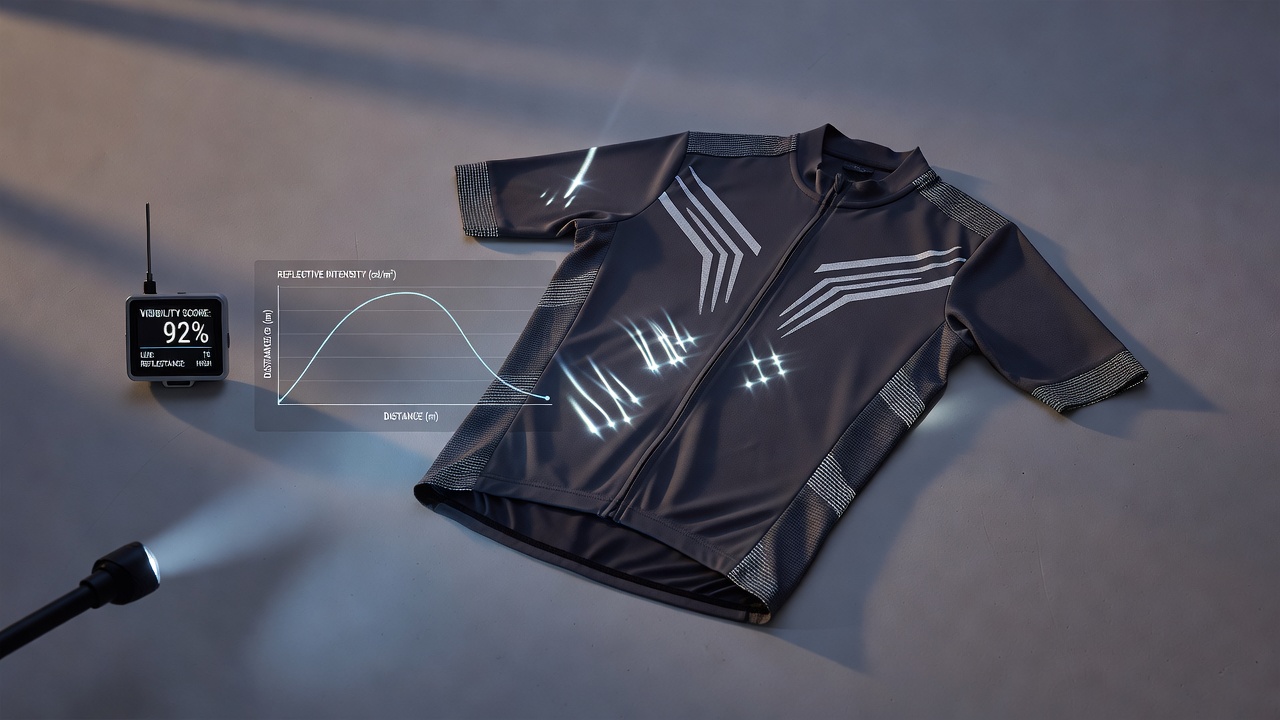
Cycling jerseys incorporate reflective threads through weaving processes that embed microprismatic or glass bead materials directly into the fabric structure, and these integrations create surfaces that return light from vehicle headlights back toward its origin. Manufacturers position the threads along torso panels, sleeve cuffs, and lower back areas where motion patterns increase the chance of detection during rides that extend into dusk or nighttime hours.
Integration Techniques in Jersey Construction
Thread placement follows patterns that balance reflectivity with fabric stretch and breathability, while designers select yarn densities that maintain garment flexibility during pedaling motions. Some production methods involve knitting reflective filaments alongside standard polyester or nylon fibers, whereas others apply adhesive-backed strips that bond to finished seams without altering the base textile properties. Data from material testing labs show that integrated threads withstand repeated wash cycles when they meet ISO 6330 standards for domestic laundering durability.
Regional manufacturers in Europe and North America adjust thread width and spacing based on garment size ranges, and this approach allows consistent coverage across different rider body types. Studies conducted by the Transportation Research Board indicate that strategic placement on moving body parts extends detection ranges compared to static reflective patches alone.
Visibility Metrics and Measurement Standards
Reflectivity gets quantified in candela per lux per square meter, with performance levels varying according to thread composition and surface angle relative to incoming light. Under low-light conditions defined as under 10 lux ambient illumination, integrated threads typically achieve retroreflective values between 50 and 300 cd/lx/m² depending on the specific weave density used. Researchers at the University of Waterloo documented how these values translate to increased detection distances when cyclists travel at speeds between 20 and 35 kilometers per hour.
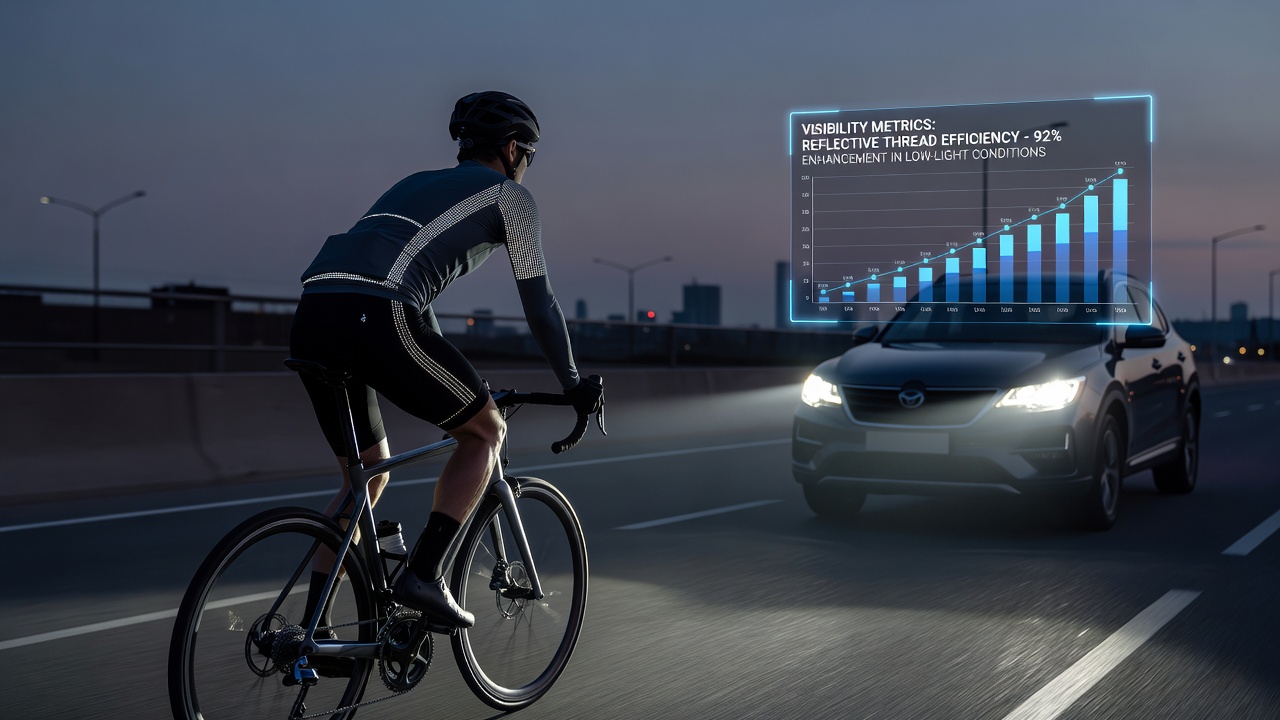
Standards organizations establish minimum thresholds for performance, and the European standard EN 17353 outlines requirements for high-visibility clothing in non-professional settings while the Australian/New Zealand AS/NZS 4602 specifies similar criteria adapted for local road conditions. Figures released in June 2026 by the European Road Safety Observatory revealed that jerseys meeting combined thread integration criteria improved average detection distances by 45 meters in controlled low-light trials involving multiple vehicle headlight types.
Testing Protocols Under Low-Light Conditions
Evaluation methods simulate real-world scenarios through controlled environments that replicate road surfaces, varying headlight intensities, and cyclist movement patterns, while photometers record light return at multiple angles and distances. Observers note that thread performance declines when fabric becomes wet or covered in road grime, although certain polymer coatings applied during manufacturing help preserve reflective properties under those circumstances. One study from the Monash University Accident Research Centre examined how thread orientation affects performance when riders lean forward into aerodynamic positions common during longer rides.
Additional variables include color contrast between the reflective elements and the jersey base fabric, and data indicate that high-contrast combinations yield better results across a range of lighting spectra produced by modern LED vehicle lights. Testing facilities rotate samples through temperature cycles and UV exposure to assess long-term degradation rates before certifying products for market release.
Performance Data Across Different Conditions
Comparative analyses reveal variations based on thread technology, with microprismatic constructions often outperforming older glass bead versions in wet weather while both types show strong results on dry roads. Research indicates that integrated designs maintain visibility advantages over add-on accessories that can shift position during rides. Metrics collected from field observations in urban and rural settings demonstrate consistent patterns where reflective thread coverage correlates with earlier recognition by drivers approaching from behind.
But here's the thing: thread density must stay within ranges that avoid reducing moisture-wicking performance of the base fabric, and manufacturers address this balance through selective placement rather than full-surface coverage. Evidence from multiple testing rounds shows that riders wearing compliant jerseys experience measurable improvements in low-light conspicuity without compromising comfort during extended efforts.
Conclusion
Reflective thread integrations continue to evolve through refinements in material science and garment engineering, and visibility metrics provide measurable benchmarks that guide ongoing product development. Data collected across international testing programs establish clear connections between thread placement, reflectivity values, and detection performance under low-light conditions. Those involved in cycling safety research track these developments as standards and measurement techniques advance in response to changing vehicle lighting technologies and road environments.