Polymer Blend Patterns Influencing Durability of Inflatable Balls in Team Sports Amid Varying Weather
Finley Jenkins · Jun 2, 2026
Polymer Blend Patterns Influencing Durability of Inflatable Balls in Team Sports Amid Varying Weather
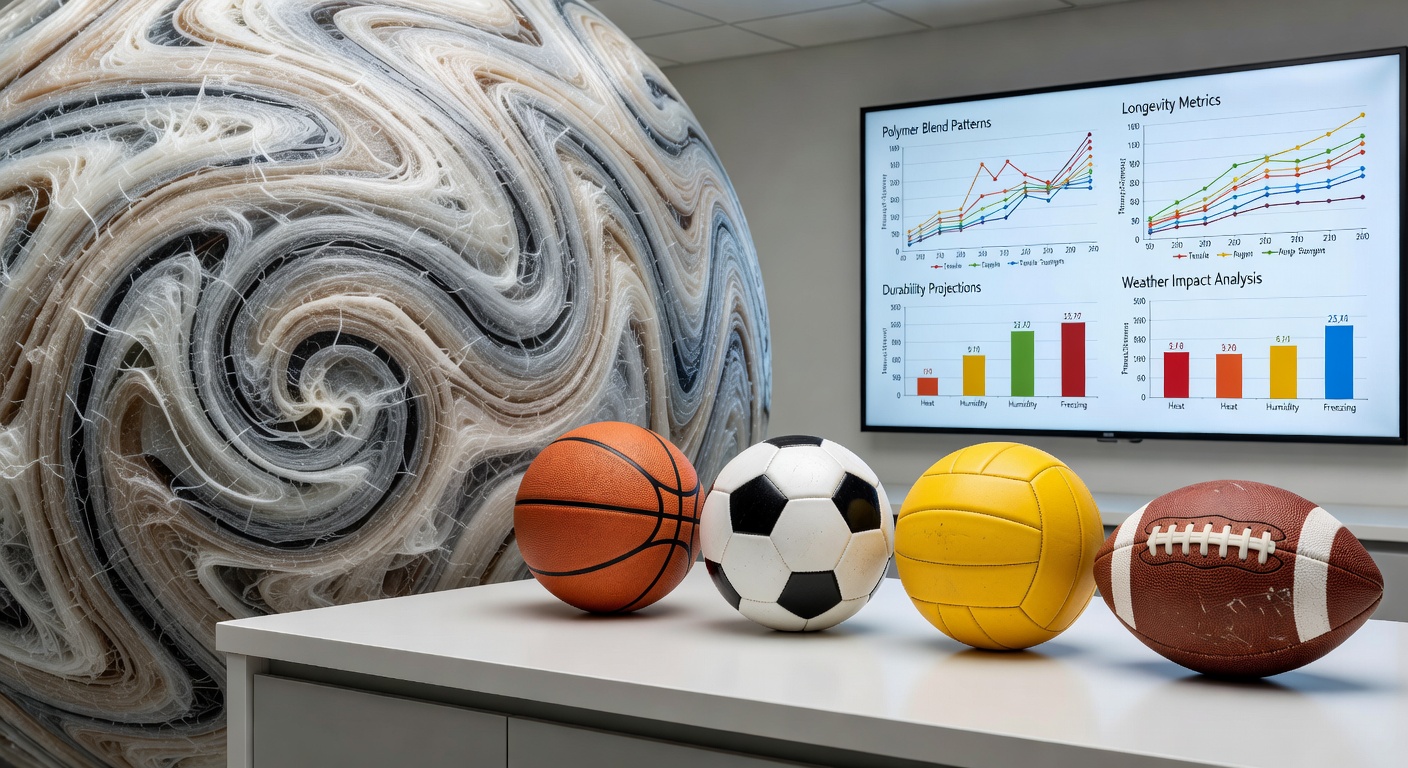
Polymer blends in inflatable balls determine how well these products withstand repeated use across team sports such as soccer, basketball, volleyball and American football when exposed to heat, cold, moisture and ultraviolet radiation. Researchers have identified specific ratios of materials including polyurethane, polyvinyl chloride and synthetic rubbers that create patterns affecting elasticity retention, seam integrity and surface cracking over time.
Core Components in Polymer Formulations
Manufacturers combine base polymers with additives such as plasticizers, UV stabilizers and antioxidants to produce outer covers and inner bladders. Studies from institutions in North America and Europe show that blends containing 60 to 70 percent polyurethane by weight maintain flexibility longer in temperatures above 30 degrees Celsius compared with higher PVC content. Data from the American Society for Testing and Materials indicates that increasing cross-linking agents in these mixtures reduces permeability to air by up to 25 percent under humid conditions.
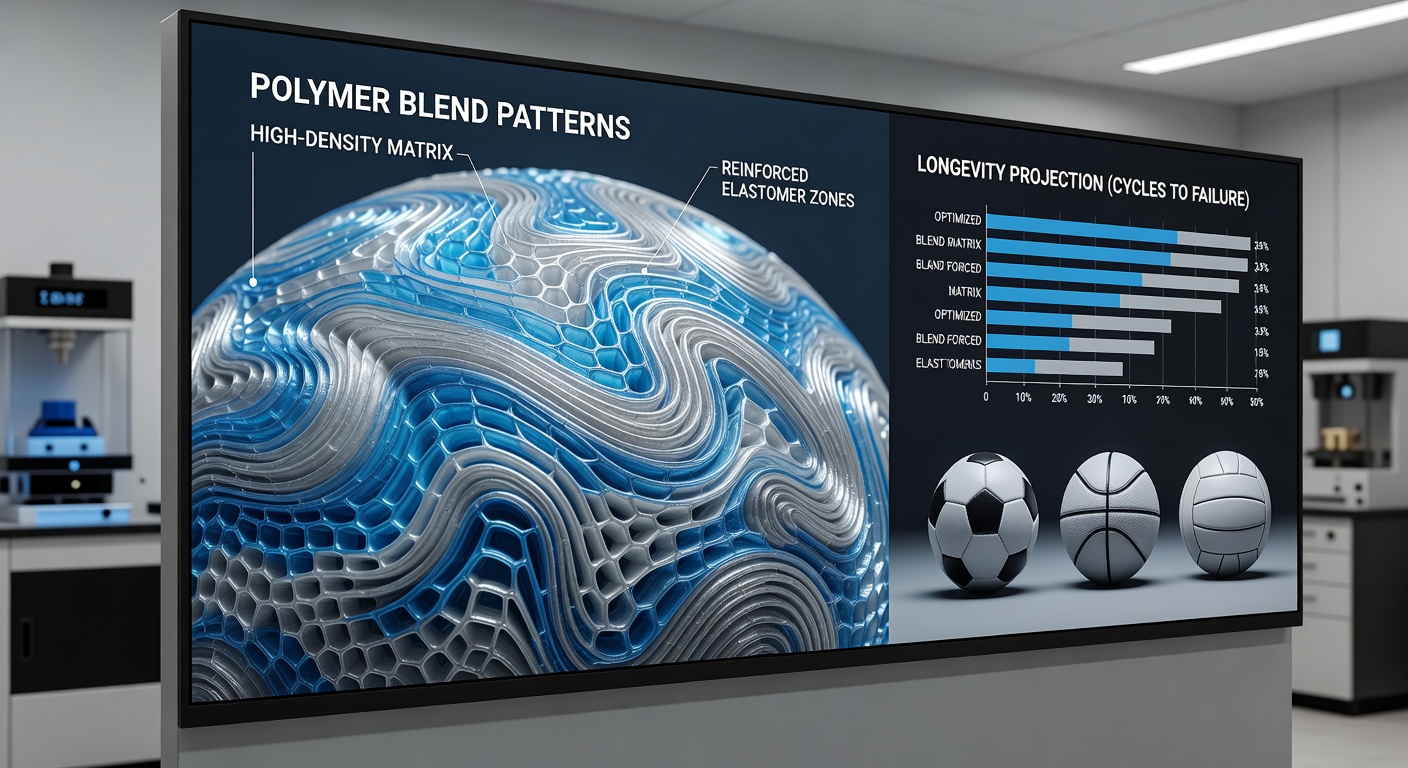
Those who analyze production records note that alternating layers of differing densities within the cover material create micro-patterns that distribute stress during inflation and impact. These layered structures appear in balls used in professional leagues where equipment faces constant exposure to outdoor fields and indoor courts alike.
Weather Effects on Blend Longevity
High temperatures accelerate plasticizer migration in PVC-dominant blends, leading to hardening and eventual surface fissures after 200 hours of cumulative exposure according to accelerated aging tests conducted by Canadian research facilities. In contrast, polyurethane-rich formulations retain elongation properties better when subjected to freeze-thaw cycles common in northern climates. Observers tracking ball performance in Australian leagues report that UV stabilizers added at 2 to 3 percent concentration prevent yellowing and loss of grip texture for periods exceeding 18 months of outdoor storage.
Moisture absorption presents another variable where hydrophilic additives in certain blends promote water uptake that weakens adhesive bonds at panel seams. European standardization bodies have documented cases where balls with hydrophobic coatings applied over the polymer surface showed 40 percent less weight gain after 48 hours of rain simulation.
Patterns Across Different Sports
Soccer balls often employ multi-panel constructions with blend patterns optimized for spin retention in windy conditions while basketballs prioritize abrasion resistance on polished floors through higher rubber content in the cover. Volleyball equipment tends toward lighter blends that balance buoyancy in humid environments against the need for consistent rebound on sand or hardwood. Research published by universities in Asia highlights how regional weather influences these choices with higher stabilizer levels appearing in products destined for equatorial markets.
Team equipment managers in professional settings track usage logs that correlate specific polymer ratios with replacement intervals. Patterns emerge where balls containing balanced elastomer networks last through 150 matches in mixed weather before pressure loss exceeds acceptable thresholds set by governing bodies.
Testing Protocols and Recent Developments
Standardized testing involves cyclic exposure to ultraviolet lamps, thermal chambers and water sprays that replicate seasonal variations. Figures from international round-robin trials completed before June 2026 reveal that predictive models based on Fourier-transform infrared spectroscopy can forecast blend degradation rates with accuracy above 85 percent when calibrated against field data. These methods allow producers to adjust additive packages before full-scale manufacturing.
Industry groups continue refining specifications that address emerging polymer combinations incorporating bio-based components while maintaining performance benchmarks established for traditional synthetics. Equipment certification programs now incorporate extended weather cycling that spans multiple simulated seasons within controlled laboratory timelines.
Conclusion
Patterns within polymer blends directly shape how inflatable balls perform and endure across team sports when weather conditions shift. Continued analysis of material ratios, additive distributions and layered structures provides measurable indicators for longevity under heat, cold, moisture and radiation. Data from testing organizations and research centers supports ongoing refinement of these formulations to match demands in diverse playing environments.