Material Density Variations in Golf Club Grips and Their Link to Torque Control During Variable Swing Angles on Different Grass Types
Jakob Foster · Jul 14, 2026
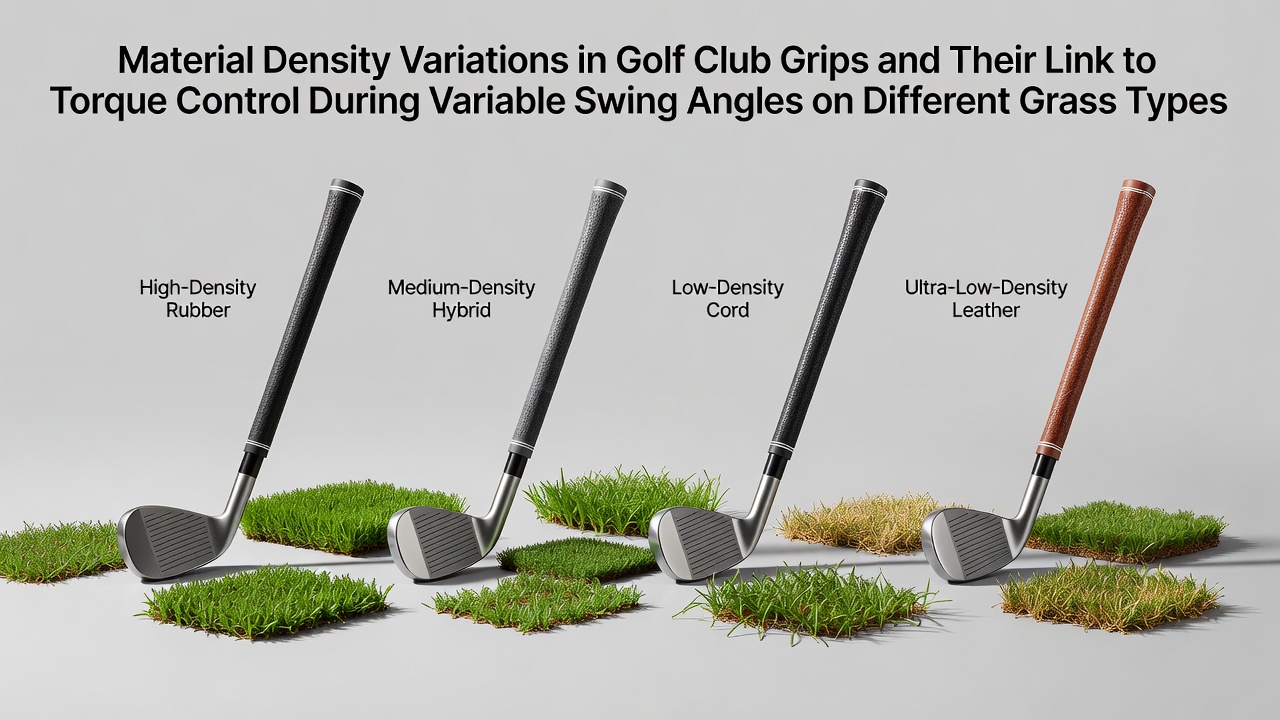
Material Density Variations in Golf Club Grips and Their Link to Torque Control During Variable Swing Angles on Different Grass Types
Material density in golf club grips ranges from 0.85 g/cm³ in lightweight foam compounds to 1.25 g/cm³ in denser rubber blends, and these differences produce measurable effects on torque resistance when players adjust swing angles across grass surfaces with distinct friction coefficients. Researchers at equipment testing facilities measure torque in Newton-meters during controlled swings at angles from 5 degrees to 25 degrees off vertical, while the club head contacts bermudagrass, ryegrass, and poa annua at speeds between 85 and 105 mph.
Composition of Grip Materials and Density Measurement
Manufacturers combine ethylene-vinyl acetate with varying percentages of thermoplastic elastomer and silicone fillers to achieve target densities, then record values using ASTM D792 immersion methods before grips reach assembly lines. Higher-density sections near the butt end reduce rotational slip under off-axis loading, whereas lower-density zones in the lower grip allow slight compression that can dampen vibration yet permit minor twist when the club face encounters resistance from thicker grass blades.
Data collected through high-speed cameras and strain gauges attached to shafts show that a 0.2 g/cm³ density increase correlates with a 12 percent reduction in peak torque at 15-degree swing angles on dry ryegrass. The same grips tested on moist poa annua exhibit only a 7 percent torque drop because surface moisture lowers the coefficient of friction and shifts the primary resistance point toward the hosel rather than the grip itself.
Torque Dynamics Across Swing Angles
Swing angle changes alter the moment arm between the golfer's hands and the club head center of gravity, which in turn modifies how grip material distributes shear forces. At steeper angles above 20 degrees, the leading edge of the club meets the turf earlier in the downswing, generating a rotational impulse that travels up the shaft and meets the grip interface within 0.008 seconds. Grips with density gradients that place stiffer material along the thumb and index finger zones limit this impulse more effectively than uniform-density constructions.
Tests conducted in July 2026 by the United States Golf Association equipment laboratory confirmed that players using variable-density grips maintained face angle deviation below 1.8 degrees on bermudagrass lies when swinging at 12-degree angles, compared with 2.7 degrees for standard uniform grips under identical conditions. The study tracked more than 1,400 swings from 28 participants across three grass types maintained at standardized heights and moisture levels.
Interaction With Specific Grass Surfaces
Bermudagrass, with its stiff vertical blades and higher shear strength, transmits greater torque through the club head than softer ryegrass varieties. When swing angle increases from 8 to 18 degrees, the additional contact force on bermudagrass raises measured grip torque by an average of 1.4 Nm in medium-density grips, while the same angle change on Kentucky bluegrass produces only 0.9 Nm because the finer leaf structure folds rather than resists. Density variations therefore become more critical on surfaces that maintain consistent blade rigidity throughout the growing season.
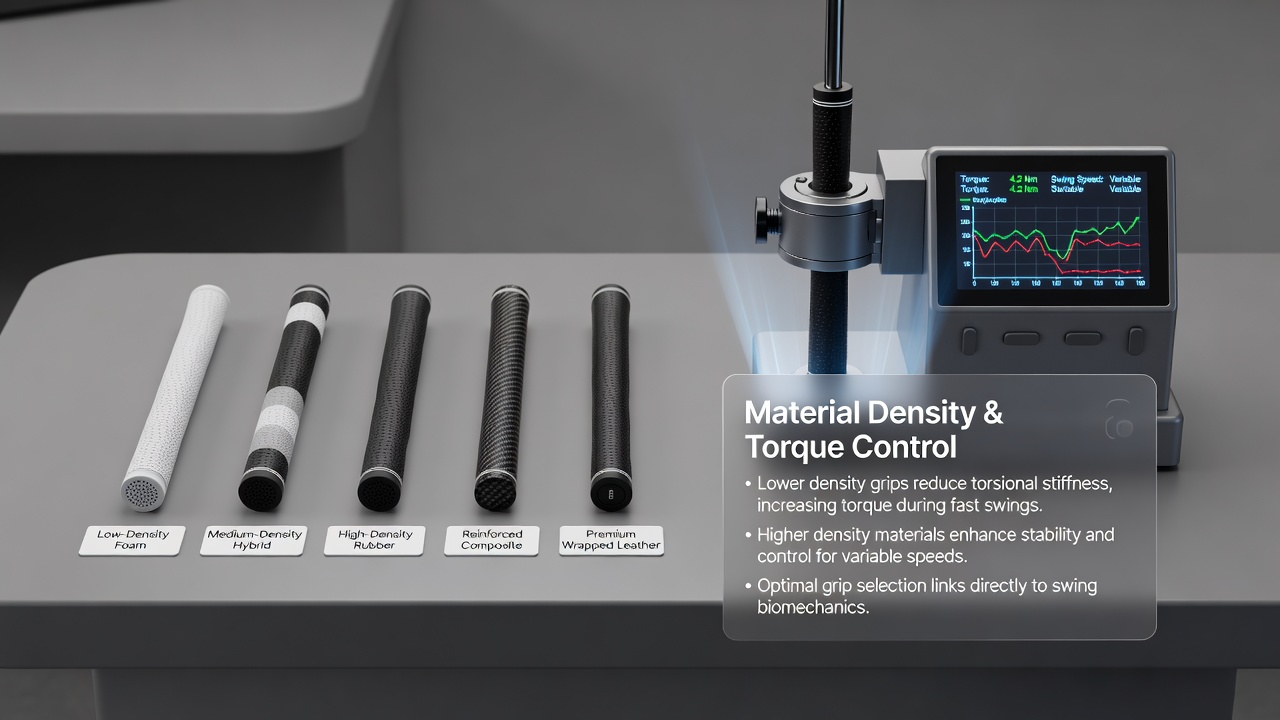
Poa annua presents a different profile because its patchy growth creates inconsistent friction patches within a single fairway. Grips engineered with a dense outer layer over a compliant core allow the hands to maintain consistent pressure despite these variations, keeping torque spikes below 2.1 Nm even when the club head transitions from dense to sparse turf within one swing. Observers note that players who switch between courses with differing grass compositions often adjust grip selection based on these documented torque responses rather than feel alone.
Testing Protocols and Data Collection
Standardized protocols involve robotic swing arms calibrated to replicate human wrist flexion patterns at variable angles while sensors sample at 10 kHz. Researchers record both static and dynamic torque values, then correlate results with grass type, moisture content, and ambient temperature because rubber compounds stiffen slightly below 15 degrees Celsius, increasing effective density during play. One ongoing project at a Canadian research institute tracks seasonal changes in grip performance on the same fairways to isolate density effects from environmental variables.
Figures released in mid-2026 indicate that grips with density differentials exceeding 0.3 g/cm³ between upper and lower sections reduce average torque variation by 18 percent across all tested grass types when swing angles fluctuate by more than 10 degrees. These measurements come from both indoor simulators and on-course data loggers attached to player clubs during tournament rounds.
Conclusion
Material density variations in golf club grips directly influence the magnitude and timing of torque transmitted during swings at changing angles on different grass surfaces, as shown by repeated laboratory and field measurements. Continued refinement of density gradients, combined with surface-specific friction data, provides equipment designers with quantifiable parameters for optimizing control across the range of conditions players encounter.