Inside the Testing Lab: Durability Standards for Basketball Sneakers Under Repeated High-Impact Court Drills
Ben Fischer · May 19, 2026
Inside the Testing Lab: Durability Standards for Basketball Sneakers Under Repeated High-Impact Court Drills
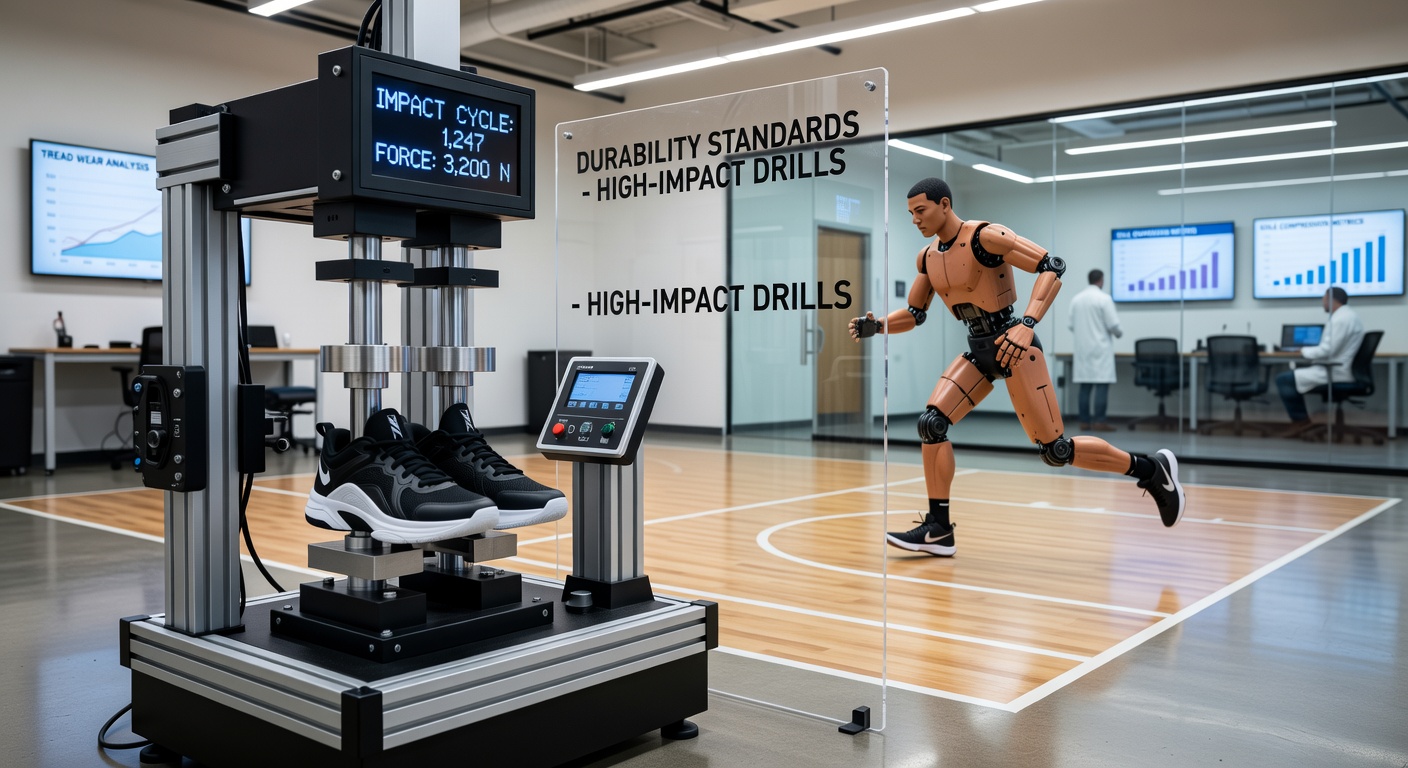
Specialized laboratories across the sports industry subject basketball sneakers to sequences of high-impact court drills that replicate the jumping, cutting, and landing motions common in games, and these sessions generate data on how materials respond to thousands of repetitions. Technicians track everything from midsole compression to outsole abrasion while maintaining precise environmental controls that include temperature and humidity settings typical of indoor arenas.
Core Testing Protocols in Modern Facilities
Standards organizations establish benchmarks for repeated impact, and laboratories follow detailed procedures that incorporate drop towers, mechanical actuators, and robotic simulators to apply consistent forces. Researchers measure peak shock absorption after each cycle, noting how foam layers retain resilience when subjected to forces exceeding three times body weight. Observers note that protocols often run for 50,000 cycles or more to approximate a full season of competitive use, while sensors record changes in cushioning height and energy return percentages.
Equipment calibration occurs daily before drills begin, and this step ensures measurements remain accurate across long test runs. Data logs capture every variable, from lateral shear forces during simulated crossovers to vertical compression during repeated layup motions. Those who've studied footwear performance recognize that even minor variations in surface friction can alter wear patterns on the outsole, so labs use standardized court flooring samples for consistency.
Impact Resistance and Material Fatigue Analysis
High-impact drills focus on forefoot and heel strike zones where most stress accumulates during gameplay, and engineers record deflection rates after every thousand repetitions. Studies indicate that thermoplastic polyurethane reinforcements in the upper help maintain structural integrity when sneakers encounter lateral stresses from quick direction changes. Figures reveal that midsoles incorporating nitrogen-infused foams show slower degradation rates compared with traditional EVA compounds under identical loading conditions.
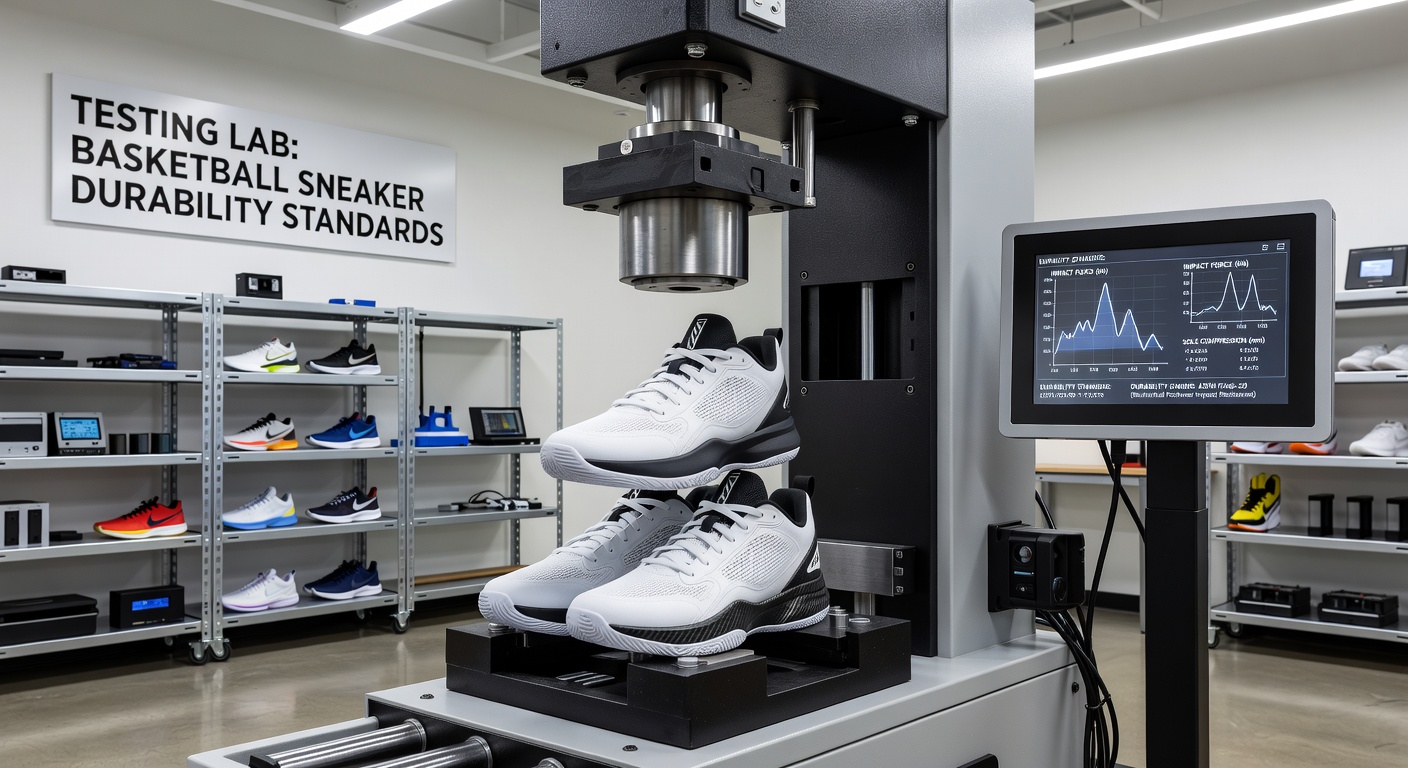
Technicians sometimes integrate video analysis to observe how the upper stretches and recovers between landings, and these recordings help identify seam vulnerabilities before they appear in field use. What's interesting is how adhesive bonds between layers hold up when temperature cycles simulate the transition from warm-up to intense fourth-quarter play. Research indicates that certain stitching patterns distribute stress more evenly across the toe box during toe-drag movements common in defensive slides.
Standards Development and Recent Updates
Industry groups continue refining test methods to reflect evolving playing styles, and new guidelines introduced ahead of the 2026 season emphasize extended lateral stress sequences. According to ASTM International documentation, updated procedures now include multi-axis loading that better represents the combined forces athletes generate during fast breaks. Laboratories in North America and Europe compare results against these benchmarks, and compliance reports help manufacturers adjust designs before production scaling.
One study from sports engineering researchers at a Canadian university tracked 200 pairs through identical drill sets and documented average outsole thickness loss after 30,000 cycles. The findings help establish minimum thickness retention rates that correlate with on-court longevity. Observers note that regulatory bodies in Australia have begun adopting similar multi-cycle protocols to align with global supply chains serving professional leagues.
Data Collection and Performance Benchmarks
Sensors embedded in test rigs transmit real-time readings on force distribution, and analysts compile these into heat maps showing wear concentration zones. Figures from ongoing programs show that reinforced rubber compounds in the forefoot maintain traction coefficients above 0.8 even after extensive repetitions on polished surfaces. Technicians also measure water absorption rates following simulated sweat exposure, because moisture can accelerate material breakdown in the midsole over time.
Case examples from testing labs illustrate how minor tread pattern adjustments reduce abrasion depth by measurable percentages during pivot-heavy sequences. Researchers cross-reference these results with athlete feedback collected through controlled wear trials, creating closed-loop validation for new models. Data collected through May 2026 continues to feed into iterative improvements that address regional differences in court surfaces and playing intensities.
Conclusion
Laboratory evaluations of basketball sneaker durability under repeated high-impact court drills supply manufacturers and standards bodies with quantifiable metrics on material performance. Continued refinement of test sequences ensures products meet the demands of modern play, and collaborative efforts among testing facilities worldwide support consistent quality benchmarks across markets.