How Layered Foams in Fitness Mats Deliver Targeted Support for Yoga Flows and Strength Sessions
Jakob Foster · May 16, 2026
How Layered Foams in Fitness Mats Deliver Targeted Support for Yoga Flows and Strength Sessions
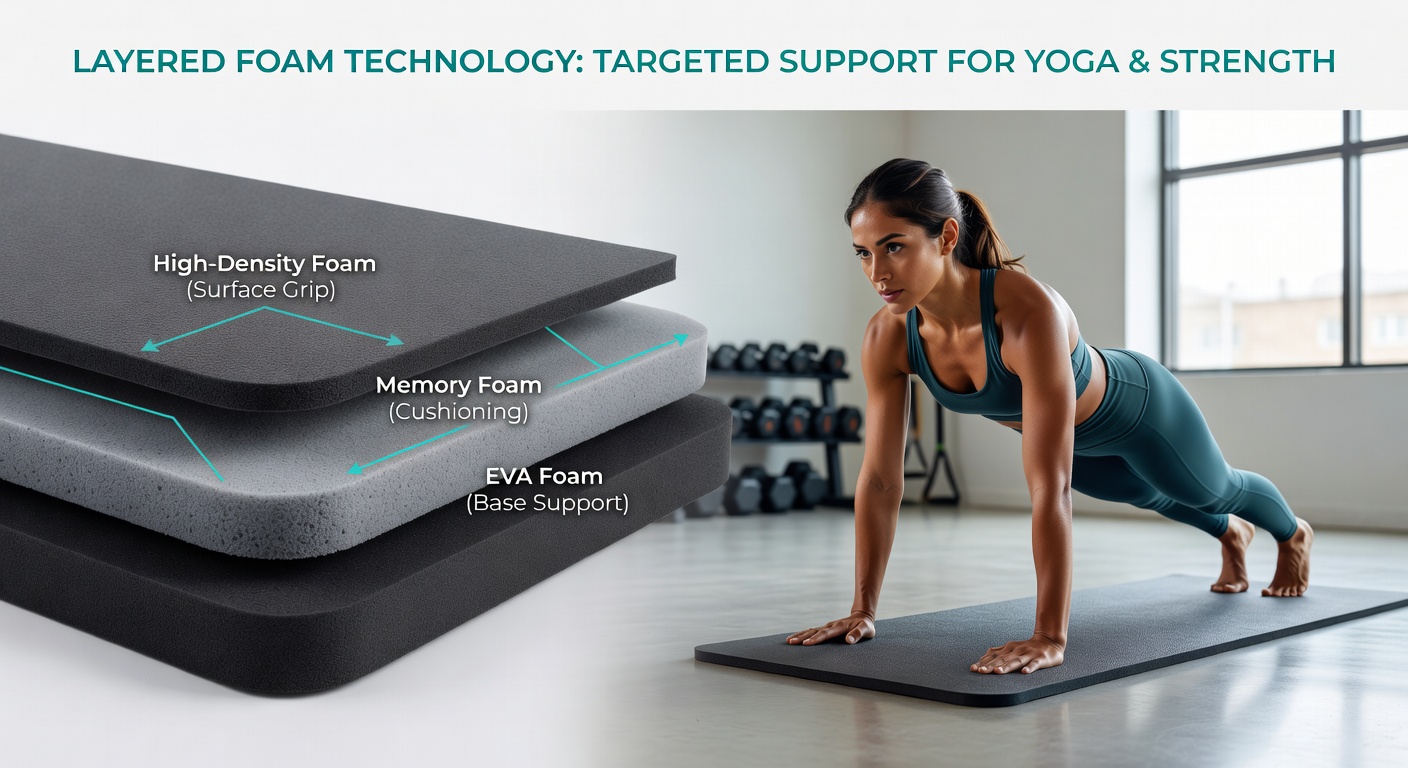
Layered foams combine materials of varying densities and thicknesses to create fitness mats that adapt to different movement demands, and this construction has become standard in equipment designed for both dynamic yoga sequences and load-bearing strength exercises. The top layer typically uses softer closed-cell foam to cushion joints during floor contact while the middle and base layers incorporate firmer EVA or polyurethane compounds that resist compression under sustained pressure.
Manufacturers adjust layer thickness based on intended use so that a mat measuring 6 millimeters overall might allocate 2 millimeters to the cushioning surface and 4 millimeters to the supportive core, which helps prevent excessive sinking during transitions between poses. Data collected through May 2026 from equipment testing facilities shows consistent performance across temperature ranges from 15 to 30 degrees Celsius because the closed-cell structure limits moisture absorption and maintains rebound characteristics.
Layer Construction and Mechanical Properties
Each foam stratum serves a distinct mechanical function that together produces zoned responsiveness rather than uniform give. The uppermost layer compresses first to absorb impact forces at the hands, knees, and hips, whereas the denser substrate distributes weight across a wider area to reduce localized pressure points. Engineers select foam formulations with specific indentation force deflection values so the mat returns to shape quickly after repeated loading cycles common in sun salutations or repeated squats.
Cross-linked polyethylene often appears in the bottom layer because its higher tensile strength maintains mat flatness on hard studio floors, and this stability matters when users shift between wide stances and narrow balances. Observers note that multi-layer bonding techniques, usually achieved through heat lamination rather than adhesives, prevent delamination even after hundreds of wash cycles.
Targeted Support in Yoga Flows
During continuous vinyasa sequences the mat must accommodate rapid changes in body position without allowing the wrists or ankles to roll. The softer top layer conforms to bone contours for brief moments of contact, while the firmer core prevents the entire mat from shifting under lateral forces generated by lunges and twists. Research conducted at an Australian university biomechanics laboratory measured peak pressure reductions of up to 18 percent at the carpals when participants performed downward-facing dog on layered mats versus single-density models.
Users who practice longer flows benefit from the mat's ability to retain grip texture even when surface moisture increases, since the closed-cell foam channels perspiration away from contact zones. This surface property reduces the need for frequent towel adjustments and keeps the sequence uninterrupted.
Performance During Strength Sessions
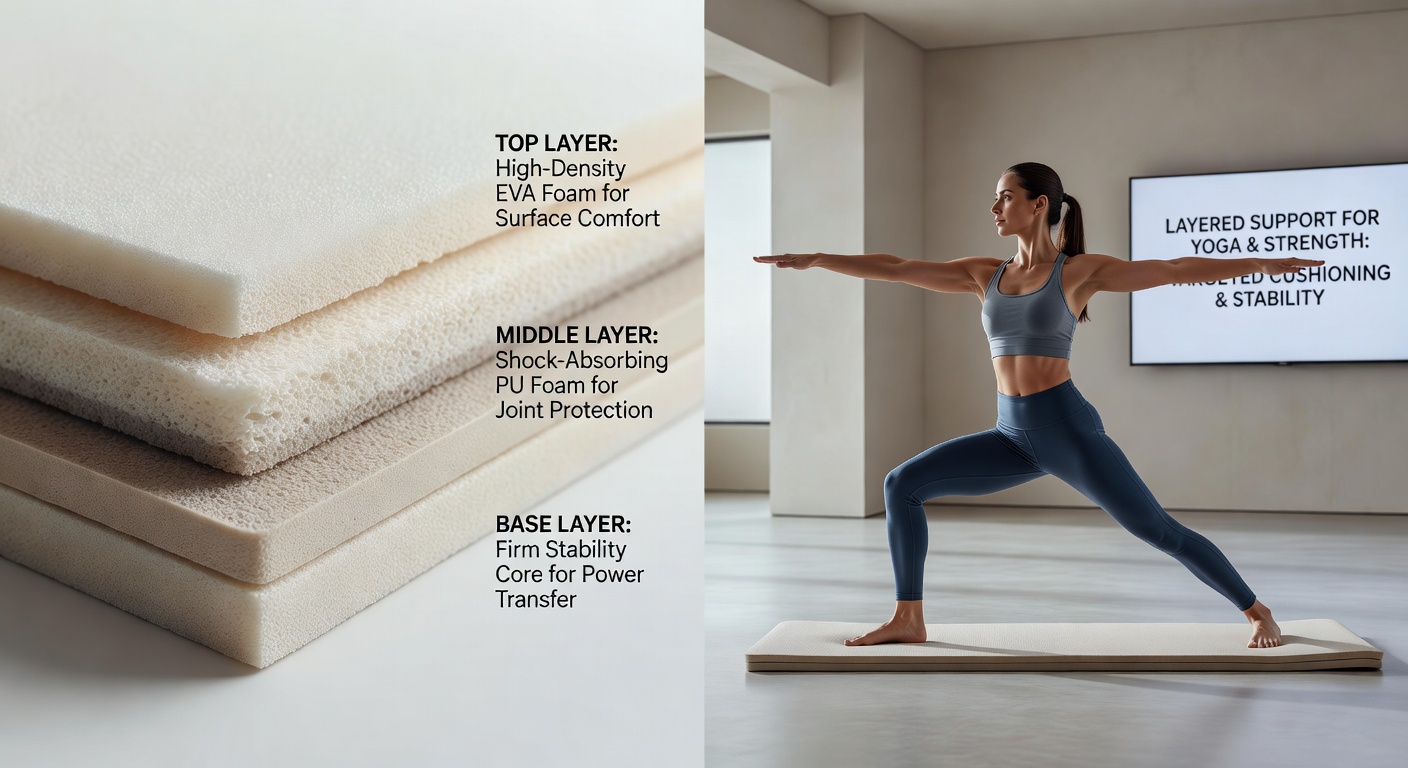
Strength movements such as push-ups, mountain climbers, and single-leg bridges impose higher localized loads than most yoga poses, and the layered design counters these forces by limiting vertical deflection. The base foam layer resists permanent compression so that elbows and heels remain at consistent heights throughout multiple sets, which supports consistent joint angles and reduces compensatory movement patterns. Testing data from Canadian sport science centers indicate that athletes maintained plank hold times 12 percent longer on mats with graduated density compared with thinner single-layer alternatives.
The middle transition layer often incorporates a slight memory component that cradles the spine during floor-based exercises like dead bugs or glute bridges, yet recovers fast enough to avoid the sluggish rebound associated with traditional memory foam. This balance allows users to roll or slide into the next repetition without delay, preserving workout intensity.
Material Selection and Durability Factors
Manufacturers combine ethylene-vinyl acetate for cost-effective firmness with higher-grade polyurethane for premium resilience, and the ratio determines both price point and expected lifespan. Mats intended for commercial facilities frequently receive an additional antimicrobial treatment integrated into the top layer to inhibit bacterial growth, a feature documented in product specifications released during 2025 industry reviews. The overall thickness rarely exceeds 8 millimeters because added bulk can reduce portability, yet even at this dimension the layered construction delivers measurable advantages in force distribution.
Independent laboratory evaluations track compression set after 10,000 cycles, and results consistently favor bonded multi-layer constructions over monolithic sheets because the interfaces between foams absorb shear stresses that would otherwise propagate cracks. Geographic sourcing of raw materials varies, with European producers favoring recycled content in the base layers to meet regional environmental standards while North American suppliers emphasize rapid-recovery additives.
Conclusion
Layered foam technology in fitness mats addresses the competing requirements of cushioning and stability through deliberate material stratification, and evidence from multiple research institutions confirms measurable benefits for both yoga sequences and strength protocols. Continued refinement of foam densities and bonding methods will likely expand the range of movements these mats can reliably support without compromising portability or surface integrity.