Grip Material Compositions in Ski Poles That Reduce Vibration Transmission to the Upper Body During Descent
Ben Fischer · Aug 15, 2026
Grip Material Compositions in Ski Poles That Reduce Vibration Transmission to the Upper Body During Descent
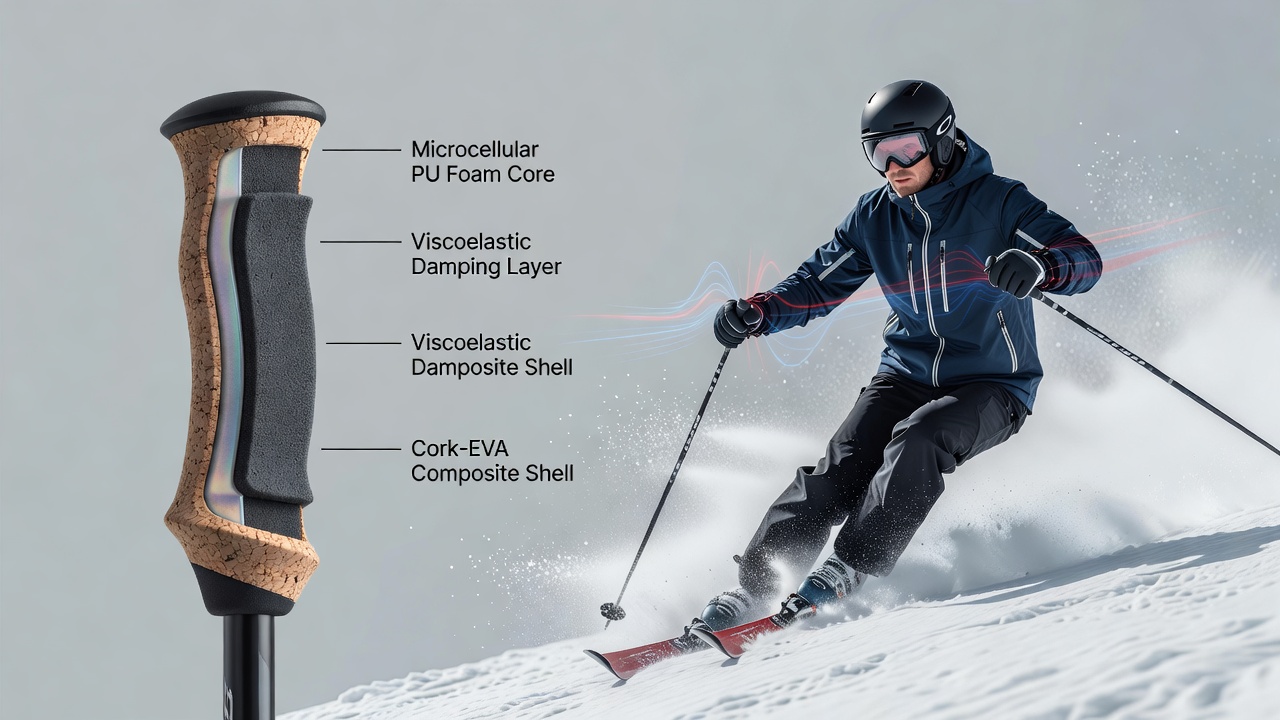
Modern ski poles incorporate specialized grip materials that interrupt vibration pathways from snow contact points up through the shaft and into a skier's hands and arms, and these compositions have evolved through systematic material science applications in winter sports equipment. Researchers at institutions focused on alpine sports have documented how specific polymer blends and natural fiber integrations alter energy transfer during high-speed turns and uneven terrain encounters, while data from field measurements on slopes indicate measurable reductions in peak acceleration transmitted to the upper body when certain grips are used.
Core Mechanisms of Vibration Control in Pole Grips
Engineers design grip layers to dissipate kinetic energy through internal friction and deformation, so vibrations generated at the pole tip encounter resistance before reaching the palm and wrist joints, and viscoelastic compounds achieve this by converting mechanical energy into heat within their molecular structures. Cork and synthetic foam combinations add porous barriers that scatter wave patterns, whereas layered elastomers create impedance mismatches that reflect portions of the vibration energy back down the pole. Studies conducted on instrumented poles during controlled descents reveal that these material interactions can lower transmitted frequencies in the 20 to 200 hertz range, which corresponds to the band most associated with hand-arm discomfort in prolonged skiing sessions.
Material Compositions and Performance Data
Manufacturers blend thermoplastic polyurethanes with silicone additives to produce grips that maintain flexibility across temperature drops typical at altitude, and these formulations demonstrate consistent damping coefficients when tested at minus ten degrees Celsius. Carbon-infused rubber overlays on cork cores further stabilize the interface between hand and pole, reducing micro-movements that amplify vibration, while independent laboratory trials using laser vibrometry have quantified amplitude reductions of up to thirty-five percent compared with standard EVA foam grips. Industry reports compiled by European standards bodies note that hybrid compositions incorporating recycled cork particles achieve similar damping effects with lower weight penalties, and these options appear in poles supplied to national teams competing in World Cup events.
Integration with Pole Shaft Designs
Grip materials function in conjunction with shaft constructions, so aluminum or carbon fiber tubes with tuned wall thicknesses complement the damping properties at the handle, and this system-level approach prevents resonance buildup that would otherwise magnify transmitted forces. Observers note that grips featuring gel pockets positioned at the thumb and forefinger contact zones interrupt specific pressure points, and accelerometer data collected during steep descent simulations show corresponding drops in cumulative vibration dose to the elbow and shoulder regions. Research published through academic channels in North America has examined how moisture absorption in certain natural fiber grips alters damping performance over multiple runs, indicating that sealed polymer coatings preserve consistent behavior across varying snow conditions.

Testing Protocols and Emerging Standards
Standardized evaluation methods measure vibration transmission using instrumented poles and human-subject trials on groomed and ungroomed surfaces, and protocols developed by organizations such as ASTM International specify frequency-weighted acceleration metrics that correlate with long-term comfort outcomes. Data collected during the 2025-2026 season across multiple resorts showed that poles equipped with advanced grip compositions maintained lower transmission values after repeated impacts from ice chunks and rutted snow, and these findings align with updated guidelines issued by the International Ski Federation on equipment specifications. A collaborative report from the University of Innsbruck details how environmental chamber tests replicate descent conditions to isolate material contributions, confirming that certain elastomer-cork sandwiches outperform single-material grips in broadband frequency attenuation.
Developments Entering August 2026
Suppliers have introduced grips with embedded micro-cellular structures that adapt stiffness based on grip pressure, and preliminary field data from European testing centers indicate further reductions in upper-body loading during aggressive carving maneuvers. Canadian research groups have explored bio-based alternatives derived from lignin compounds that offer comparable damping at reduced environmental cost, and these compositions are undergoing durability assessments in variable humidity environments typical of coastal mountain ranges. Equipment catalogs released for the upcoming season list several models incorporating these updated materials, reflecting ongoing refinement driven by both performance metrics and regulatory considerations around equipment safety.
Conclusion
Material compositions in ski pole grips continue to advance through targeted combinations of polymers, natural fibers, and structural layering that collectively limit vibration propagation during descents, and quantitative assessments from laboratory and slope environments document consistent performance gains across temperature and terrain variables. Ongoing refinement of these designs integrates with broader equipment systems, producing measurable effects on transmitted forces that affect skier comfort and control over extended runs.