Foam density shifts in fitness mats after repeated compression cycles in commercial gym settings
Ben Fischer · Jun 20, 2026
Foam density shifts in fitness mats after repeated compression cycles in commercial gym settings
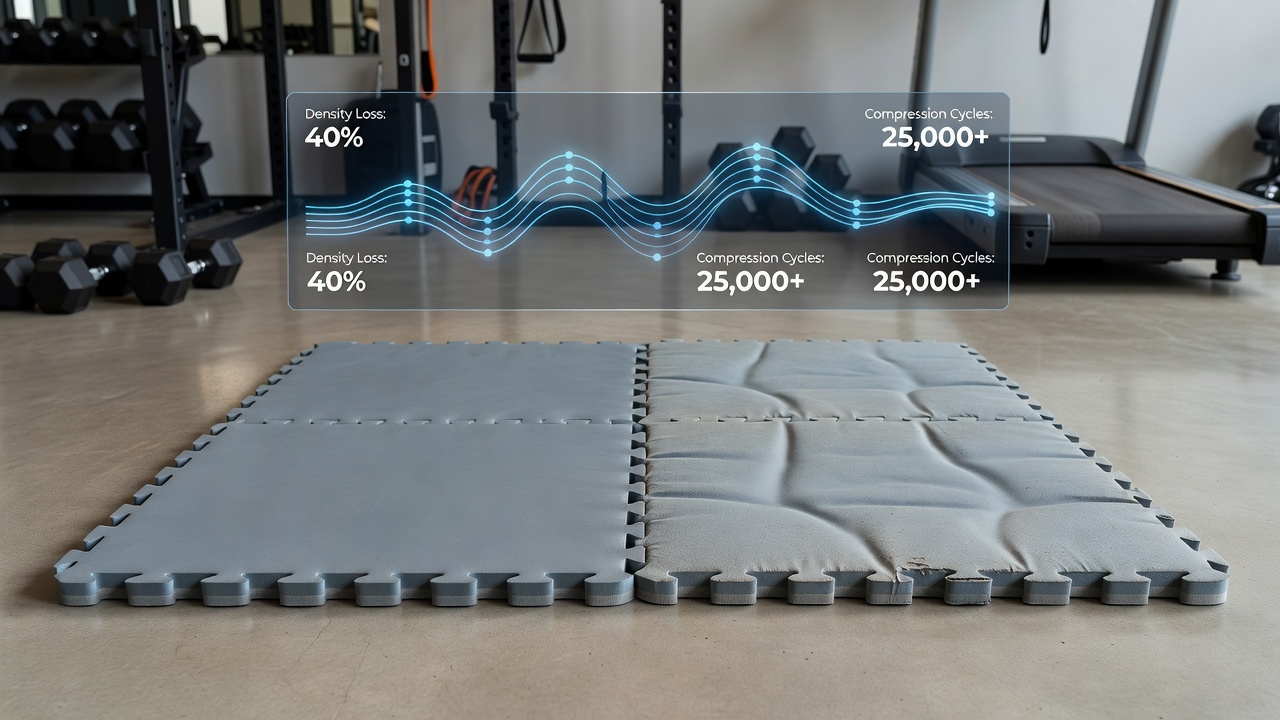
Commercial gyms place fitness mats under constant pressure from hundreds of daily users performing exercises that range from yoga flows to high-impact strength training. Foam materials in these mats respond to repeated loading by undergoing measurable changes in density, a process driven by cell structure collapse and material redistribution. Researchers track these shifts through standardized compression testing protocols that simulate thousands of cycles under controlled loads.Understanding foam composition and initial density metrics
Most commercial mats rely on closed-cell polyethylene or ethylene-vinyl acetate foams engineered for resilience and moisture resistance. Manufacturers specify initial densities between 60 and 120 kilograms per cubic meter, values that directly influence cushioning and durability. Data from materials testing laboratories show that higher starting densities correlate with slower degradation rates when mats face continuous foot traffic and bodyweight forces.
Compression cycle patterns in high-traffic environments
Gym schedules create predictable loading sequences: morning classes apply steady pressure during stretching routines, while afternoon sessions introduce dynamic impacts from kettlebell swings and burpees. Observers note that peak compression occurs during plank holds and push-up variations, where localized forces exceed 300 kilopascals on small contact areas. These patterns accelerate foam fatigue compared with residential use, where mats experience far fewer cycles per week.
Measured density changes across repeated loading
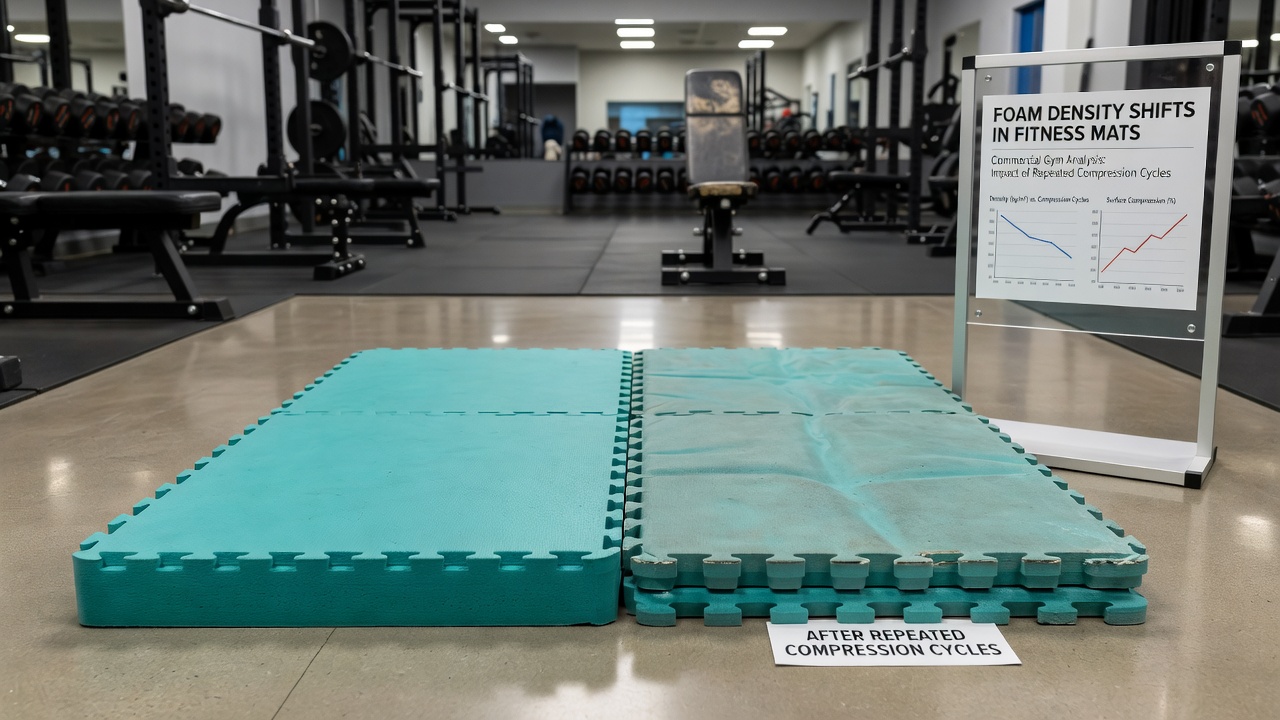
Studies conducted on polyethylene foams reveal that density typically rises 8 to 15 percent after 5,000 compression cycles, as air cells compact and polymer struts thicken. Further testing at 15,000 cycles shows continued increases up to 22 percent in some samples, while others exhibit slight decreases once micro-tears allow material migration. Figures released by ASTM International through their foam performance guidelines document these trends across multiple foam formulations.
Factors influencing the rate of density shift
Temperature fluctuations inside gyms affect foam behavior because warmer conditions soften polymer matrices and allow faster cell deformation under load. Humidity levels also play a role, since moisture absorption in open-edge areas can soften cell walls and promote uneven compaction. One study revealed that mats stored in climate-controlled rooms maintained more stable densities than those left near windows exposed to daily temperature swings.
Testing methodologies used in commercial settings
Laboratories employ cyclic compression machines calibrated to ASTM D3575 standards, applying 50 percent deflection at frequencies matching typical workout tempos. Technicians measure density before and after each test block using gravimetric methods and laser scanning to detect surface deformation. Results feed into predictive models that help facility managers estimate replacement intervals based on membership volume and class schedules.
Regional variations in mat performance data
Facilities across North America and Europe report similar density progression curves when normalized for usage hours, yet mats in coastal climates show marginally faster changes attributed to salt-laden air interacting with foam edges. European Committee for Standardization documents on sports flooring materials provide comparative benchmarks that align closely with North American findings despite differences in regulatory frameworks.
Practical implications for equipment management
Gym operators track mat performance through scheduled inspections that include density spot checks and visual assessment of permanent indentation. When density increases exceed 18 percent, surface hardness rises noticeably and users report reduced comfort during floor exercises. Replacement decisions therefore hinge on these quantitative thresholds rather than appearance alone.
Conclusion
Foam density shifts represent a predictable material response to the demands of commercial gym environments. Accurate monitoring through established testing protocols allows facilities to maintain consistent performance levels across their mat inventory while minimizing unexpected equipment failures. Continued data collection from ongoing usage studies will refine replacement guidelines and support longer service life for high-quality foam constructions.