Examining Torque Resistance Features in Tennis Racket Frames During Off-Center Ball Impacts
Tina Schwarz · May 30, 2026
Examining Torque Resistance Features in Tennis Racket Frames During Off-Center Ball Impacts
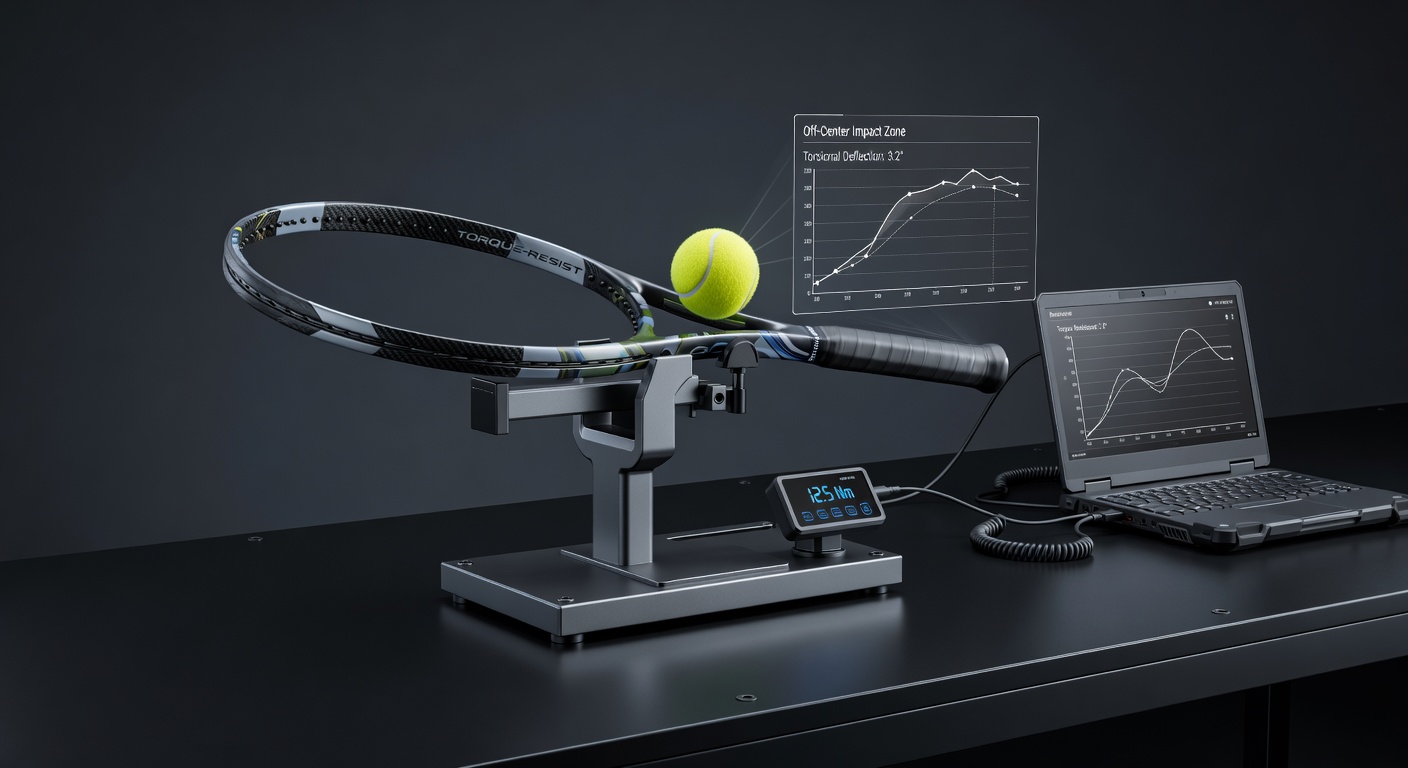
Off-center ball impacts create torque that twists racket frames around their longitudinal axis, and manufacturers address this through specific design elements that maintain stability during play. Researchers measure torque resistance by examining how frames respond when balls strike away from the sweet spot, which often occurs in competitive rallies where players stretch for shots. Data from controlled impact tests shows that frame geometry and material composition directly influence the degree of rotational deflection that occurs upon contact.
Modern racket frames incorporate carbon fiber composites layered in patterns that increase torsional stiffness while preserving overall flexibility for power generation. Engineers calculate torsional rigidity using metrics such as polar moment of inertia, and these values help predict how much twist a frame will exhibit under angled forces. Studies conducted at university laboratories have quantified these effects by mounting rackets in fixtures that simulate player grip conditions and then firing balls at precise offsets from the center.
Frame Geometry and Material Contributions
Beam width and cross-sectional shape play central roles in resisting torque because wider profiles distribute impact forces across larger surface areas. Oval or trapezoidal beam designs appear in many contemporary models, and these shapes alter how shear stresses travel through the frame walls during off-center strikes. Manufacturers adjust wall thickness in the hoop and throat regions to balance weight with strength, and finite element analysis guides these decisions by modeling stress concentrations at typical impact locations.
Graphite and graphene reinforcements embedded within epoxy matrices enhance the frame's ability to return to its original shape after twisting forces subside. Research indicates that fiber orientation angles between 30 and 60 degrees relative to the racket's long axis provide optimal resistance without adding excessive mass. Players who frequently encounter off-center contact notice that rackets with these layered constructions maintain directional control more consistently across extended match play.
Testing Protocols and Measurement Standards
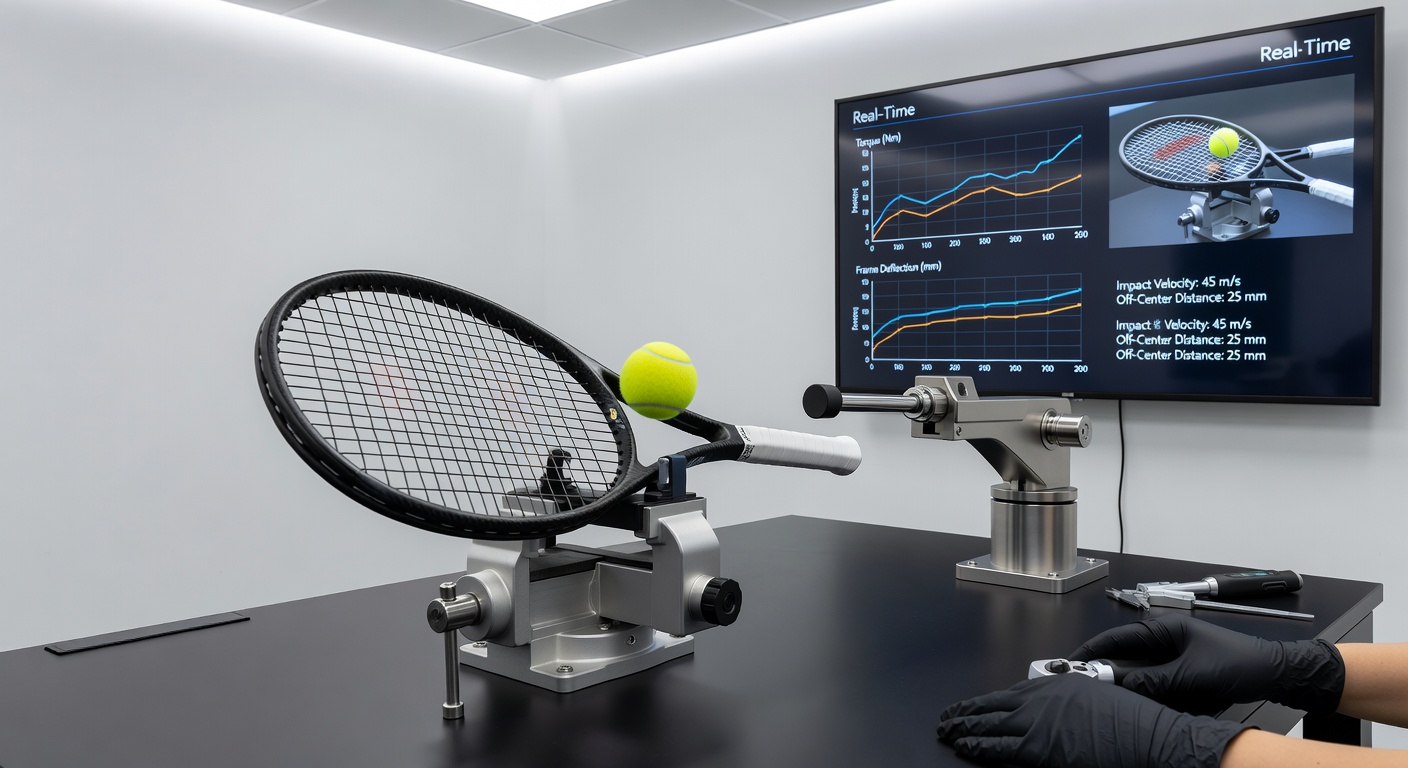
Laboratory setups replicate real-world conditions by securing rackets at the handle and recording angular displacement with high-speed sensors placed along the frame. Impact velocities range from 20 to 40 meters per second to mirror serves and groundstrokes, while ball placement varies in 10-millimeter increments from the geometric center. Results from such tests reveal that frames with integrated grommet systems or internal bracing reduce peak torque by measurable percentages compared with simpler constructions.
Industry organizations including the International Tennis Federation publish guidelines that encourage standardized evaluation methods, and these protocols allow comparison across different brands and models. Data collected through 2025 and into May 2026 continues to refine understanding of how temperature and humidity interact with material properties to affect torsional performance during outdoor events.
Performance Implications During Match Play
Off-center impacts that generate high torque can cause the racket face to rotate slightly at contact, which alters the outgoing ball trajectory and reduces accuracy on shots hit near the frame edges. Frames engineered with throat reinforcements and asymmetric string bed patterns help mitigate these effects by channeling forces back through the handle rather than allowing rotational movement. Observers at professional tournaments note that players using high-torque-resistance models maintain rally consistency even when forced into defensive positions.
Additional features such as vibration-dampening inserts placed near the yoke further support stability because they absorb secondary oscillations that follow the initial twist. According to reports from equipment testing facilities in Australia, rackets incorporating these elements show lower variability in ball speed retention after repeated off-center strikes. The same studies link frame mass distribution to torque outcomes, with more weight positioned toward the sides of the hoop proving effective at countering rotational forces.
Advances in Composite Layup Techniques
Recent manufacturing processes use automated fiber placement to create localized zones of increased torsional strength without uniform thickening throughout the frame. This approach keeps swing weight manageable while targeting areas most susceptible to twisting during angled impacts. European research groups have documented how hybrid carbon and basalt fiber blends improve fatigue resistance after thousands of off-center loading cycles, extending usable racket lifespan under tournament schedules.
Players switching between different frame stiffness ratings often report changes in how mishit balls behave, and these subjective experiences align with objective measurements taken in controlled environments. Manufacturers continue to publish technical specifications that include torsional stiffness ratings, allowing buyers to compare models based on documented performance data rather than marketing claims alone.
Conclusion
Torque resistance in tennis racket frames depends on integrated choices in geometry, materials, and construction methods that collectively limit twist during off-center ball impacts. Laboratory data and field observations demonstrate measurable differences between designs, and ongoing refinements in testing continue to inform product development. As equipment evolves through 2026 and beyond, the focus remains on delivering frames that preserve control and consistency regardless of impact location on the string bed.