Cleat Stud Patterns That Influence Rotational Grip for Soccer Players During Quick Cuts on Hybrid Turf Surfaces
Tina Schwarz · May 26, 2026
Cleat Stud Patterns That Influence Rotational Grip for Soccer Players During Quick Cuts on Hybrid Turf Surfaces
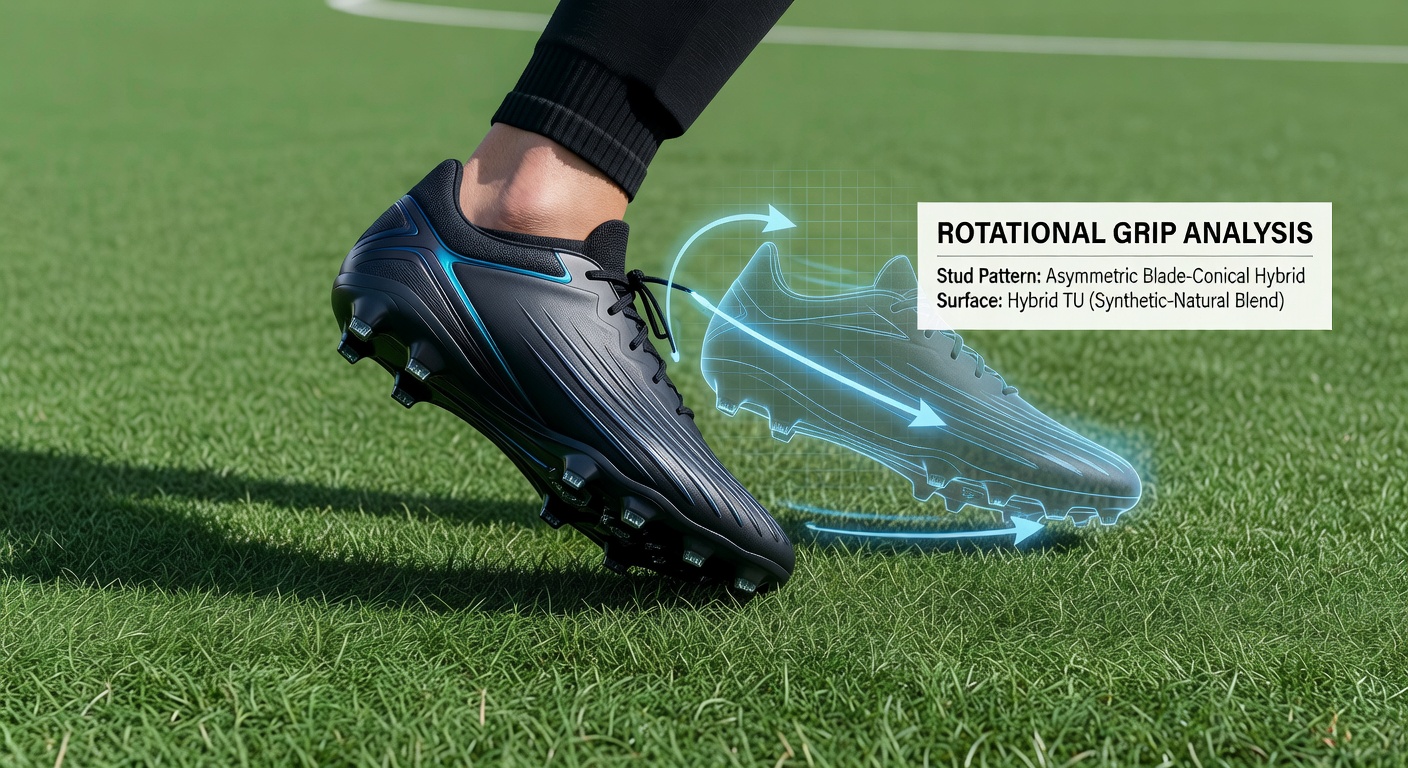
Hybrid turf surfaces combine natural grass with synthetic fibers to create consistent playing conditions that support both player movement and surface durability, while cleat stud patterns determine how effectively soccer players achieve rotational grip during quick cuts and directional shifts. Different stud geometries interact with the mixed fiber and root structure of hybrid pitches to either enhance or limit torque resistance, which affects how athletes plant and pivot without slipping or sticking excessively. Research from institutions across multiple regions shows that stud arrangement, shape, and material composition directly influence the coefficient of rotational traction measured in controlled testing protocols.
Common Stud Geometries and Their Traction Profiles
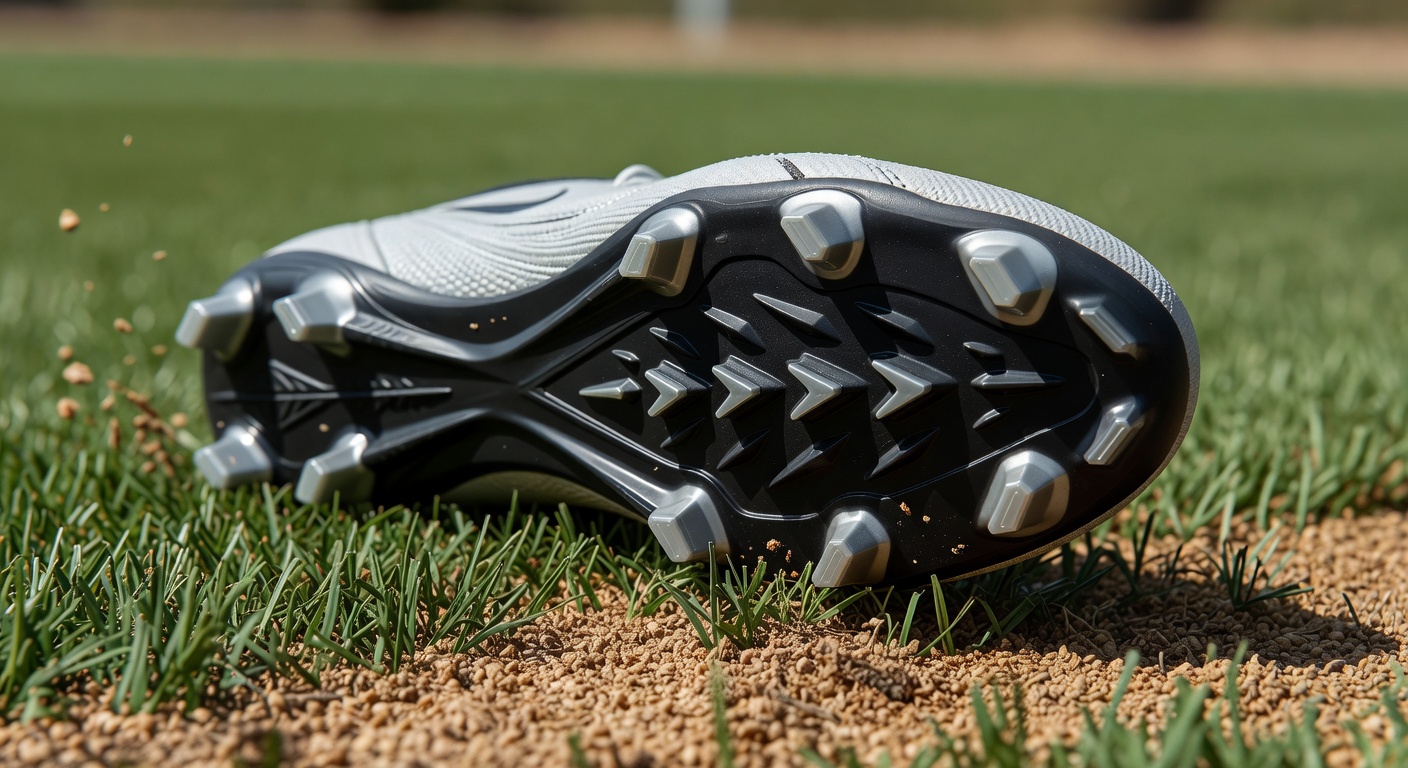
Round conical studs distribute pressure evenly across the hybrid surface and allow moderate rotation while maintaining linear acceleration, whereas bladed or fin-shaped studs increase surface engagement during lateral movements because their edges catch the synthetic fibers and grass roots more aggressively. Multi-directional patterns often incorporate a mix of both shapes arranged in asymmetric clusters around the forefoot and heel, which lets players execute cuts at varying angles without uniform resistance that could strain joints. Data collected on European and North American hybrid installations indicate that players wearing 6-stud configurations experience different peak torque values compared to those using 8-stud or 12-stud arrangements during 90-degree cutting maneuvers.
Material Composition and Surface Interaction
Thermoplastic polyurethane and rubber compounds used in modern studs flex differently under load, which alters how deeply each stud penetrates the hybrid matrix before rotating. Softer compounds conform to the irregular spacing between synthetic filaments and natural grass, while harder compounds maintain shape and create more predictable grip points. Observers note that temperature fluctuations affect these materials, with warmer conditions softening the compounds and cooler weather increasing rigidity, both of which modify rotational resistance on the same pitch throughout a match or training session.
Testing Protocols for Rotational Grip
Standardized methods measure torque required to rotate a weighted cleat sample on hybrid turf samples at controlled angles and speeds, producing values expressed in Newton-meters. These protocols simulate the forces generated when athletes cut sharply while running at high speed, and results help manufacturers adjust stud spacing and orientation. Figures from collaborative studies involving Australian and Canadian research teams reveal that optimal rotational traction ranges fall between specific thresholds that balance performance with injury mitigation on hybrid surfaces.
Placement of studs under the metatarsal heads and heel influences how weight shifts during a cut, because forefoot studs bear the majority of rotational load when players push off the inside edge of the foot. Patterns that cluster studs more densely on the medial side of the sole often provide enhanced grip for inside cuts, while lateral clusters support outside cuts. Those who've analyzed professional match footage observe that players frequently adjust their foot strike angle based on the cleat pattern they wear, which changes the effective contact area with the hybrid turf.
Hybrid Turf Specific Considerations
Hybrid surfaces contain a higher density of synthetic filaments than fully natural grass, which creates additional points of mechanical interlock with stud edges during rotation. This increased filament presence can amplify grip compared to traditional grass, yet the same filaments may also trap studs more firmly if the pattern lacks sufficient release angles. Maintenance practices such as brushing and infill redistribution affect how consistently the surface responds to different stud geometries over time, and pitch operators monitor these variables to maintain uniform traction across the field.
Player Adaptation and Pattern Selection
Athletes often select stud patterns based on position demands, with midfielders who execute frequent short cuts favoring configurations that allow quick release, while forwards who rely on explosive linear bursts plus occasional pivots choose patterns optimized for both traction modes. Equipment specialists work with teams to match cleat designs to the specific hybrid turf composition installed at each venue, because variations in filament height and grass species alter how studs behave during rotation. Data gathered from multiple professional leagues shows consistent differences in cutting mechanics when players switch between round-stud and bladed-stud models on the same surface type.
Conclusion
Stud pattern design remains a central factor in how soccer cleats interact with hybrid turf during the high-torque movements required for quick cuts. Manufacturers continue refining geometries and materials based on torque measurements and field performance data, while surface producers adjust hybrid specifications to complement common stud configurations. The relationship between these elements determines the rotational grip available to players and shapes equipment choices across competitive levels.