Carbon Fiber Layering Patterns in Golf Shafts and Their Role in Maintaining Energy Transfer Consistency at Varied Swing Speeds Under Tournament Play
Jakob Foster · Jun 27, 2026
Carbon Fiber Layering Patterns in Golf Shafts and Their Role in Maintaining Energy Transfer Consistency at Varied Swing Speeds Under Tournament Play
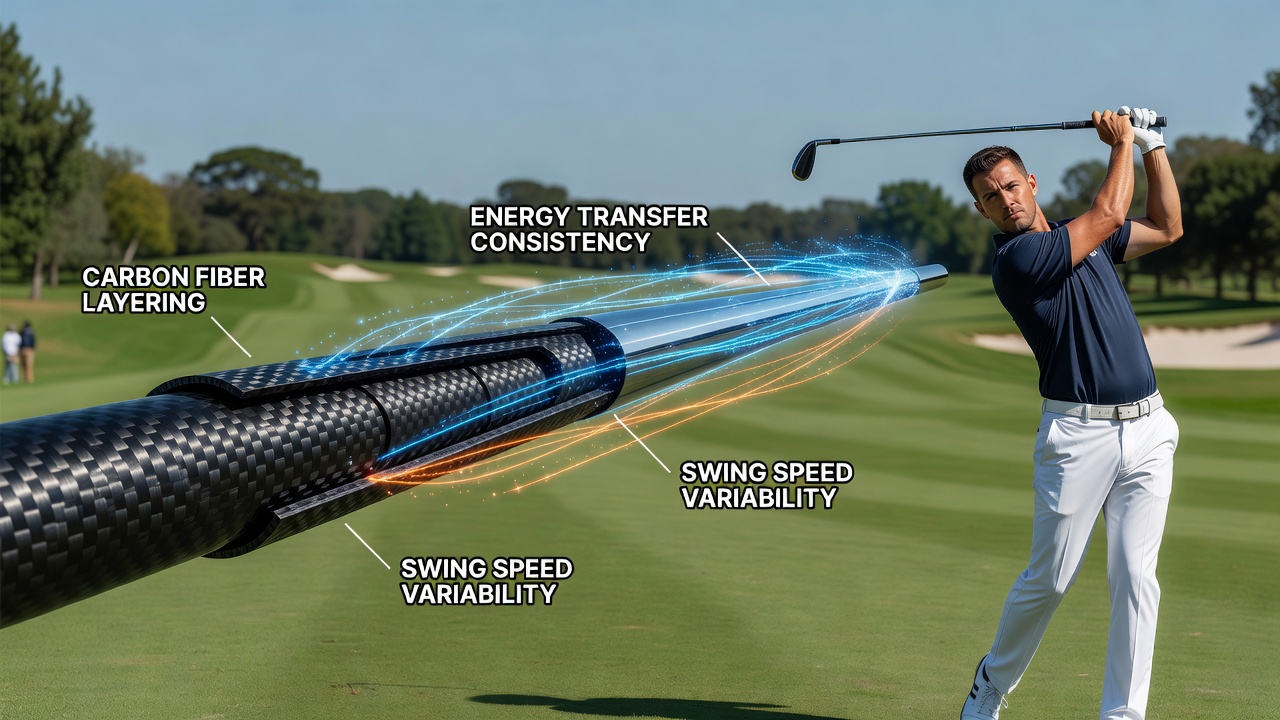
Modern golf club shafts rely on precise carbon fiber layering to control how force moves from the golfer's hands through the club and into the ball, and researchers continue to examine how these constructions perform when swing speeds range from 80 mph amateur levels up to 120 mph professional swings during actual tournament rounds. The material consists of pre-preg sheets stacked at angles such as zero degrees for longitudinal stiffness, forty-five degrees for torsional resistance, and ninety degrees for hoop strength, which together determine the shaft's overall flex profile and energy return characteristics. Studies conducted by equipment testing facilities show that these layered configurations reduce unwanted twisting while allowing controlled bending that stores and releases kinetic energy in a repeatable manner across repeated swings.
Basic Construction Methods Used in Current Shaft Production
Manufacturers build shafts by wrapping carbon fiber sheets around a mandrel in specific sequences, and each additional ply adds stiffness or flexibility depending on its fiber direction and resin content. A typical tour-level shaft might contain twelve to eighteen layers total, with the inner plies often oriented longitudinally to handle bending loads while outer layers run at bias angles to manage torque. Data collected from high-speed camera analysis during fitting sessions indicates that shafts with balanced multi-directional layering maintain their bend point location more consistently when the golfer increases or decreases swing tempo. Those who've measured frequency and CPM values across multiple shafts note that even small changes in layer count or resin percentage can shift the kick point by several millimeters, which in turn alters the timing of energy release at impact.
Energy Transfer Mechanics Across Different Swing Speeds
At lower swing speeds the shaft experiences less loading, so energy transfer depends heavily on the shaft's ability to return to its original shape without excessive lag or oscillation. Higher swing speeds generate greater centrifugal force, which loads the layered structure more aggressively and can expose any inconsistencies in how the fibers share the strain. Observers note that shafts engineered with graduated layering, where stiffer fibers sit closer to the butt section and more responsive plies occupy the tip, tend to produce more uniform clubhead speed measurements when tested on robotic swing machines set to replicate both amateur and professional tempos. Research published by the USGA equipment standards division demonstrates that consistent energy transfer correlates directly with reduced variation in ball speed readings across a range of input forces.
Performance Observations From Tournament Environments
During competitive events players encounter changing temperatures, humidity levels, and fatigue that can subtly affect grip pressure and swing mechanics, yet well-designed carbon fiber shafts continue to deliver repeatable energy transfer. In June 2026 at the U.S. Open, launch monitor data gathered from multiple players showed that shafts featuring symmetric forty-five-degree bias layers maintained ball speed standard deviations below two miles per hour even as swing speeds fluctuated between morning and afternoon rounds. The same data sets revealed that shafts lacking sufficient hoop strength layers exhibited greater dispersion in energy return when ambient conditions caused slight changes in shaft temperature. Tournament officials and fitters working on site reported that players who switched to shafts with refined layering patterns experienced fewer instances of early or late energy release, which helped maintain shot distance consistency throughout eighteen holes.
Testing Protocols and Data Collection Practices
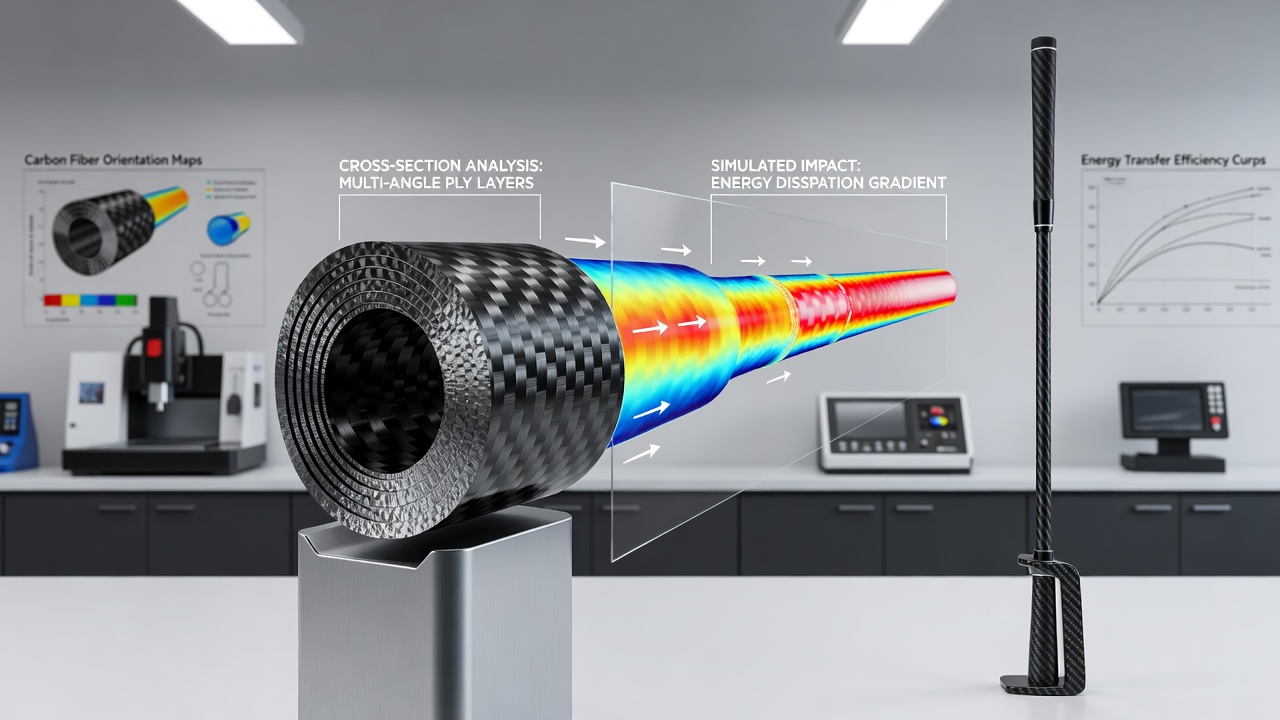
Independent laboratories use servo-driven robots programmed to reproduce specific swing profiles, and these machines record force curves at multiple points along the shaft during the downswing and follow-through phases. Results from such testing indicate that shafts with optimized layering sequences reduce peak torque values by up to fifteen percent compared with earlier single-axis constructions, leading to more predictable face angle positioning at contact. Figures compiled by Golf Canada research partners further show that energy transfer efficiency remains within a narrow band when swing speed varies by twenty miles per hour, provided the fiber angles are distributed evenly through the wall thickness. Those conducting field tests at driving ranges also measure smash factor numbers across different player groups and find that layering refinements contribute to tighter groupings of launch angle and spin rate readings even under windy tournament conditions.
Material Interactions With Clubhead Designs
Shaft layering does not operate in isolation, since the hosel connection and clubhead mass influence how bending waves travel through the entire system. Engineers adjust the tip section layup to complement modern driver heads that feature adjustable weights, ensuring the combined assembly delivers consistent energy regardless of the chosen swing speed. According to reports from the European Tour performance center, players using shafts matched to their individual loading patterns recorded steadier carry distances across a full practice session that simulated tournament pacing. The interaction becomes especially noticeable when swing speed drops during the final holes of a round, because shafts with excessive tip stiffness can lose stored energy more rapidly while those with graduated layering continue to release force at the intended point in the swing arc.
Conclusion
Carbon fiber layering techniques continue to evolve as manufacturers refine fiber angles, resin systems, and ply sequences to support consistent energy transfer at every swing speed encountered during tournament play. Data gathered from robotic testing, launch monitors, and on-course measurements demonstrates that balanced multi-directional constructions help maintain repeatable ball speeds and launch characteristics even when players experience fatigue or environmental changes. As equipment standards and player fitting practices advance, the focus remains on how these layered structures manage the complex loading patterns that occur between takeaway and impact.