Blade Flexibility Metrics in Swimming Fins Shaping Propulsion Efficiency Across Freestyle and Butterfly Strokes
Finley Jenkins · Jul 23, 2026
Blade Flexibility Metrics in Swimming Fins Shaping Propulsion Efficiency Across Freestyle and Butterfly Strokes
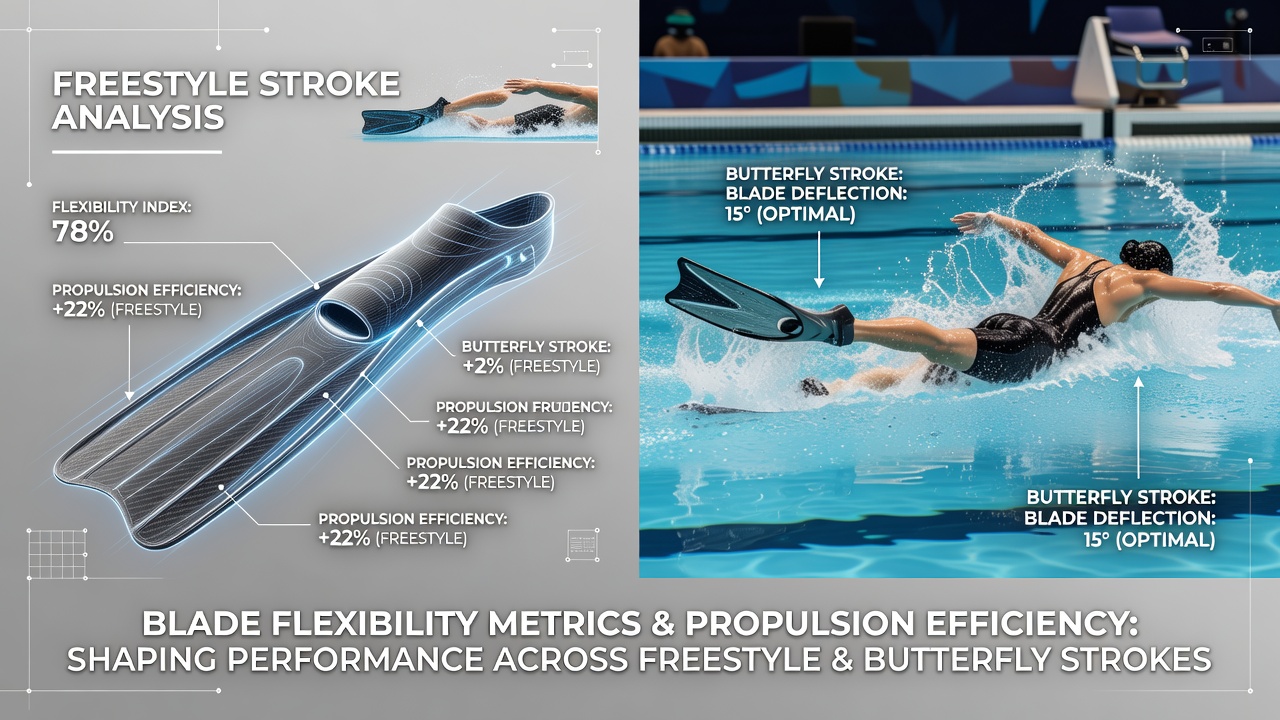
Blade flexibility metrics in swimming fins determine how much energy transfers from the swimmer's legs into forward motion, and researchers track these values through standardized deflection tests that measure bend under specific loads. Data from multiple biomechanics labs show that fins with a flexibility rating between 20 and 35 degrees under 10 kilograms of force produce different thrust patterns depending on stroke mechanics. Observers note that manufacturers publish these ratings so coaches can match equipment to athlete needs during training blocks that run through the northern hemisphere summer months.
Core Measurement Standards
Testing protocols established by sports engineering groups quantify blade stiffness by recording the angle of deflection at fixed points along the fin surface, while force plates capture the resulting water displacement. Studies conducted at the University of Western Australia indicate that a 5-degree increase in flexibility can alter peak thrust by up to 12 percent during repeated dolphin kicks. These figures come from controlled flume experiments where swimmers maintain consistent kick rates across multiple trials.
Freestyle Propulsion Dynamics
During freestyle the flutter kick relies on alternating up and down motions, and more flexible blades allow greater surface area engagement at lower velocities because the material bends to create a larger effective paddle. Research indicates that fins rated at 28 degrees of deflection under load generate higher sustained propulsion over 200-meter repeats compared with stiffer models rated at 15 degrees. Athletes who train with these specifications often record improved stroke efficiency when transitioning from kick-focused sets to full-stroke swims.
Butterfly Stroke Requirements
Butterfly demands simultaneous leg action through the dolphin kick, which places higher peak forces on the fin blade during the downbeat phase. Stiffer fins rated below 18 degrees of deflection maintain their shape under these loads and convert more of the applied force into forward thrust according to data collected at the Australian Institute of Sport. Softer blades tend to collapse slightly at the tip during the high-speed portion of the kick cycle, which reduces the effective propulsive surface and increases energy loss through turbulence.
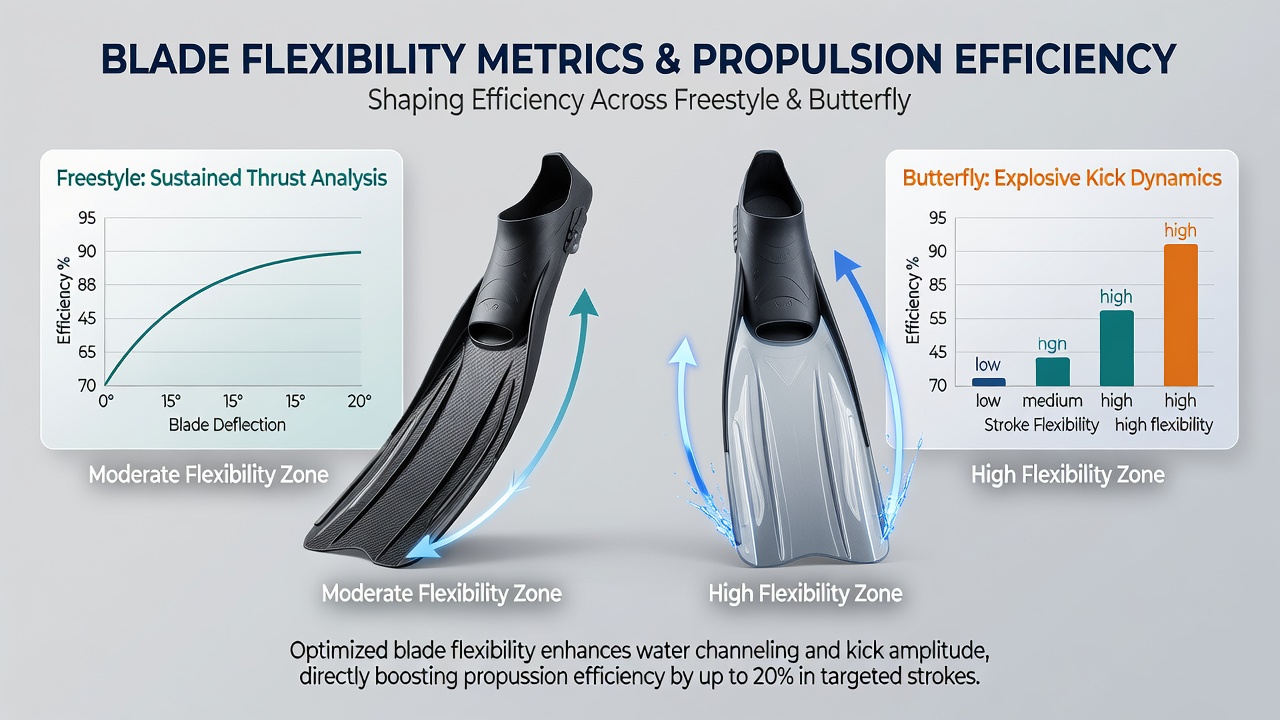
Coaches therefore select different flexibility profiles when athletes focus on butterfly-specific endurance work versus freestyle distance training. One study revealed that switching from a 25-degree flexible fin to a 12-degree rigid model during butterfly sets increased average speed by 3.8 percent over 50-meter efforts while maintaining the same kick frequency.
Comparative Performance Data
Side-by-side testing shows freestyle benefits from mid-range flexibility that balances energy return with reduced leg fatigue, whereas butterfly performance improves when blades resist excessive bending during the powerful down phase. Figures from repeated trials indicate that the same athlete may use two separate fin pairs within a single training session depending on the stroke emphasis. Those who've reviewed competition results across age-group and elite levels report that top performers often carry multiple fin options to adjust for specific event demands.
Current Testing Practices
Facilities equipped with instrumented swim flumes now collect real-time pressure mapping along the fin blade while swimmers perform both strokes at race pace. These systems record how flexibility metrics shift under varying water velocities, and the resulting datasets help refine product specifications released each season. In July 2026 several university labs plan to publish updated benchmarks that incorporate wearable sensor data from in-water training sessions.
Conclusion
Blade flexibility metrics continue to guide equipment selection across freestyle and butterfly because they directly influence how efficiently leg power converts into propulsion. Ongoing research supplies coaches and athletes with objective numbers that support stroke-specific choices without relying on subjective feel alone. The available data sets demonstrate clear patterns that equipment designers and training programs apply when optimizing performance in both strokes.